After performing this ritual time and time again, I have come to understand the impracticality of cramming a year’s worth of blogging into a single blog post. It muddies the reflections, it delays the posting, it burdens the reader, and all of that pains me. A more sensible person would have realized this much sooner. Alas, you’re stuck with me.
Time to change it up. I didn’t write about every game this year. You’re still getting the full list—I can’t give up the convention of the title this far in—but only about half of the games on it have received the full treatment, such as it is. The rest are in a separate section, each with a brief comment.
Abridgment alone won’t make this a viable or worthwhile endeavor, so I have something more drastic in mind for the future. But I’ll get to that later.
Let’s talk about some games.
The Legend of Zelda: Tears of the Kingdom / Nintendo / May 12, 2023

I had good things to say about Tears of the Kingdom last year. As with its predecessor, Breath of the Wild, I enjoy the feeling of moving through this version of Hyrule—the kingdom, the skies, and the depths.
But I’ve beaten Tears now, and some of my feelings have dimmed after finishing this second open-world Zelda game. As fun as it is to traverse the world—whether on foot, on horseback, or rocket-propelled hovercraft assembled from ancient technology—my drive to investigate all the points of interest dotting the map experienced a steep falloff.
In Breath, so much of the joy of that game was climbing to the top of a hill and marking 3 curiosities on my map before shield-surfing toward my next self-set objective. Tears remixes the map of Hyrule in the wake of the upheaval, but I still generally know what is going to be at those 3 locations when I get there: monsters I don’t want to fight, a shrine that may or may not have an interesting puzzle, or yet another Korok.
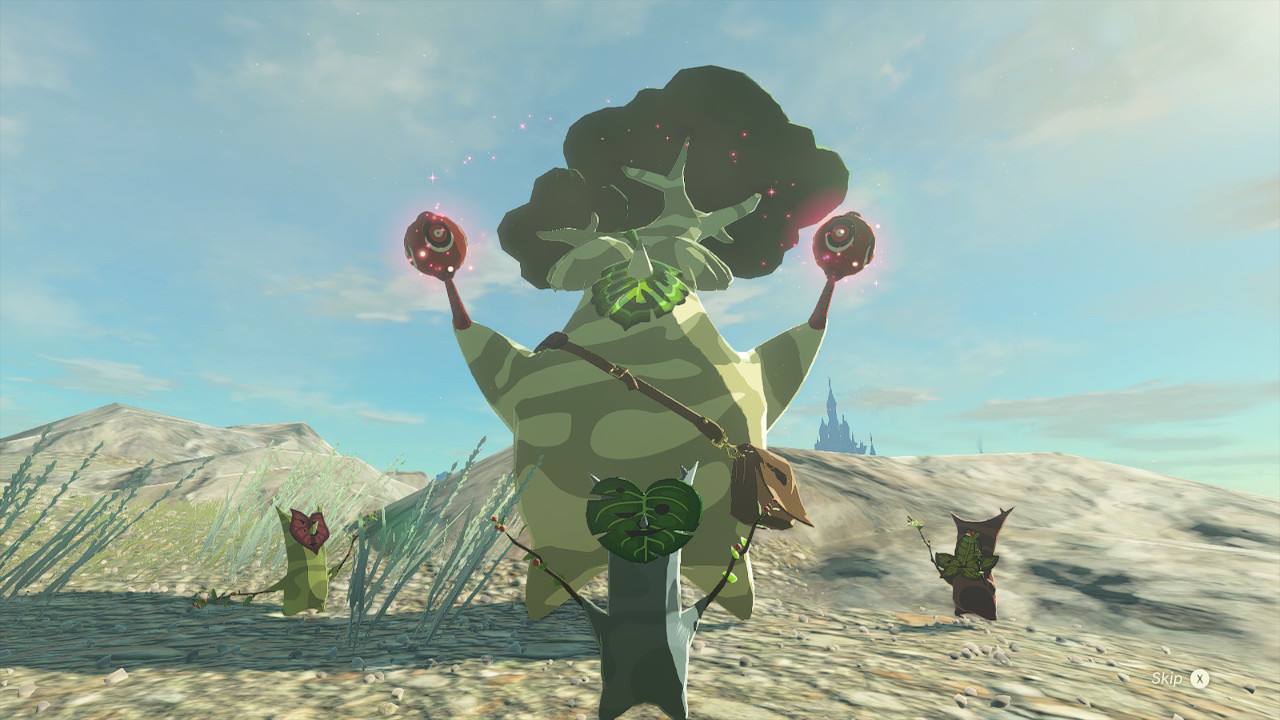
Worse, if you’ve explored one region of the map, you know exactly what you’ll find in every other region. Climate is the biggest difference from one province to the next, which enhances my experience as an explorer, but it doesn’t prevent the same-y activities from wearing out their welcome.
I have other gripes that I don’t want to spend a lot of ink belaboring, so in brief:
- For all the new enemies they added, it still feels like 90% of what you fight are bokoblins, moblins, and lizalfos. And why does a silver-tier monster have 25 times as much health as a regular one?
- The fuse power is neat, but it feels like a huge miss to not add new weapon types to Tears. Instead we get the same 4 kinds from Breath—light one-handed weapons that pair with a shield, heavy two-handed weapons, spears, and bows. Why not give Link a dagger for more lethal sneak attacks? How about dual-wielding? There’s got to be more variety in the future, even if they just add to the movesets of existing weapons.
- This is the second time they’ve failed to deliver on a skybound setting for a Zelda game. Like Skyward Sword before it, the sky islands in Tears feel sparse and empty outside of the starting archipelago. Thankfully, the game had a surprise in store with the depths, but those subterranean stretches also suffer from saminess if you delve too deep into them.
- As an example of enshittification that is specific to Nintendo (and this has more to do with the Switch than Zelda), why don’t games have a file select anymore? If you want to start a new save file in most Switch games, you have to make a new profile at the system level, otherwise you lose your current save. Why?
Pivoting a bit, I want to talk about the story in Tears, which is told in a similar fashion to the previous game.
In Breath of the Wild, Link awakens after 100 years, suffering from amnesia. History is laid bare across the landscapes and battlefields of Hyrule, and the people pass down songs and legends, whispering about the Calamity. These shared memories are presented in scenes unfolding across a tapestry. But legends are just stories, and people have a way of forgetting.
Link was there, though, and his memories can be recovered. If you return to specific spots on the map—look out over the same vista, stand on the same ground, breathe in the same air—something long forgotten comes rushing back, forcing Link’s eyes wide as the realization hits him.
These flashbacks work when viewed through a lens of repressed trauma. By witnessing how Link and Zelda struggled during their first battle with Ganon, you help Link reckon with his past failures and move on from them.
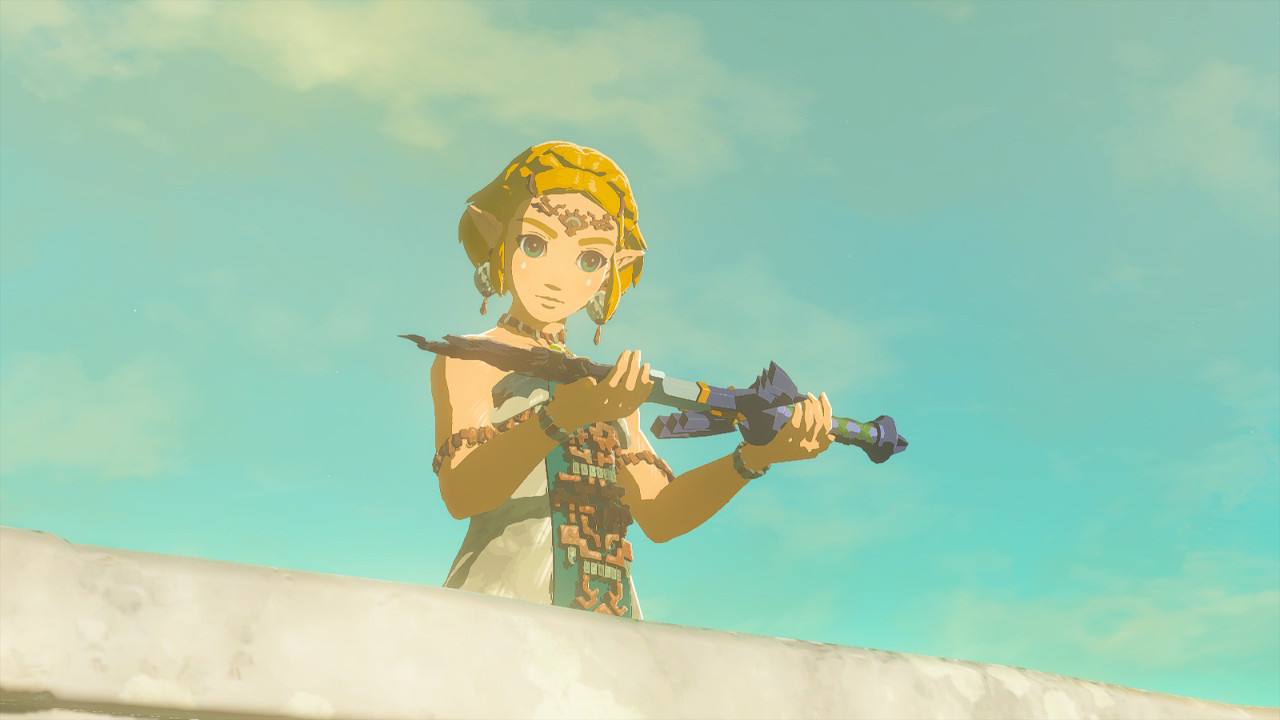
Tears of the Kingdom also relies on flashbacks to perform the legwork for its story, with a crucial and crippling difference: All of the memories you recover are Zelda’s. Link does not appear in them (for story reasons), so all the scenes you witness have nothing to do with him. And if a story has nothing to do with Link, they have nothing to do with you, the player.
In both cases, a flashback leaves something to be desired. Seeing something that has already happened, you don’t have much agency. In the case of Breath, the memories at least inform how your character is feeling. They show him how he can do things differently this time. But in Tears, you just get disjointed glimpses into a story that is happening to someone else while you’re in between destinations.
For both of these Zelda games, the true story is told through the Hero’s Path—a feature on the world map that will precisely trace your journey from start to present. I can look at my path through Tears and see the place where my route changes from the zigzagging curlicues of thorough exploration into a beeline to the final encounter.
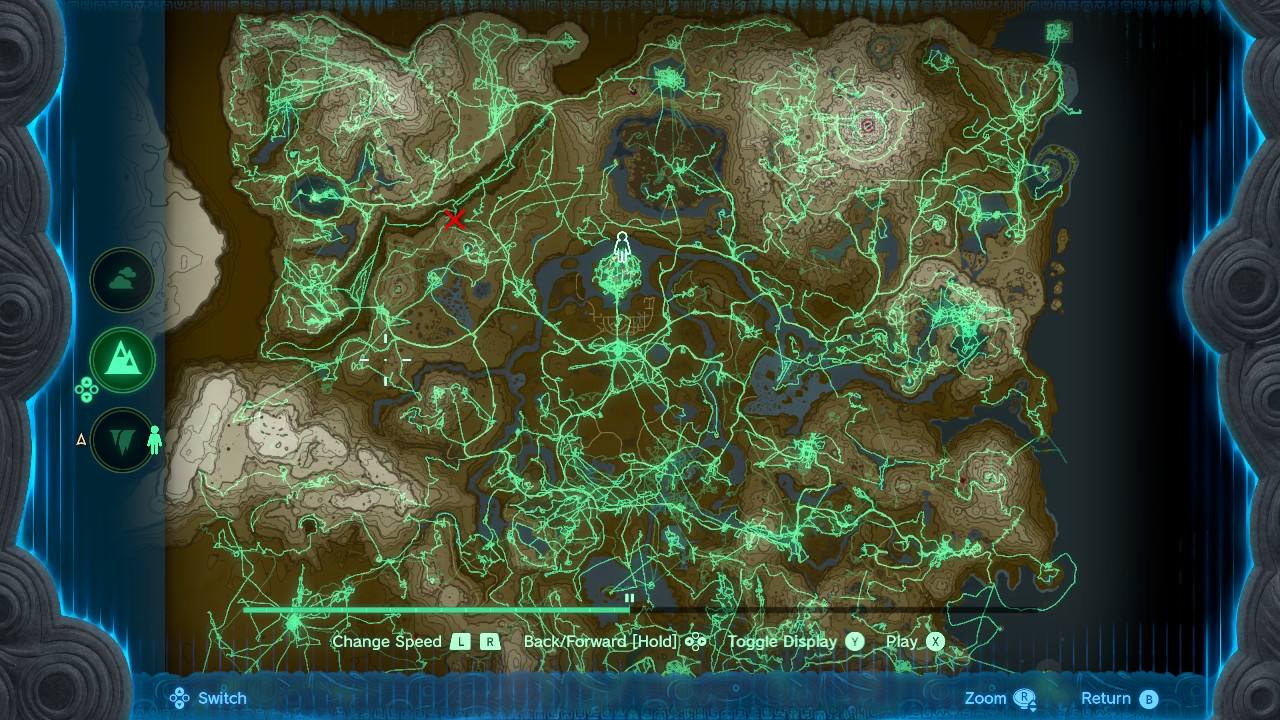
That’s the moment I felt like the game had nothing left to show me.
Puzzmo / Orta Therox and Zach Gage / October 16, 2023
For a good while, I was doing every puzzle on puzzmo.com daily. But somewhere along the way, something changed—this daily activity was stressing me out. Odd, no? Word puzzles are usually a way for me to destress. They’re a ritual, a calibration, a way to jump-start my brain for the day.
Let’s walk through the current lineup of puzzmo-zles to try and figure out how this happened.
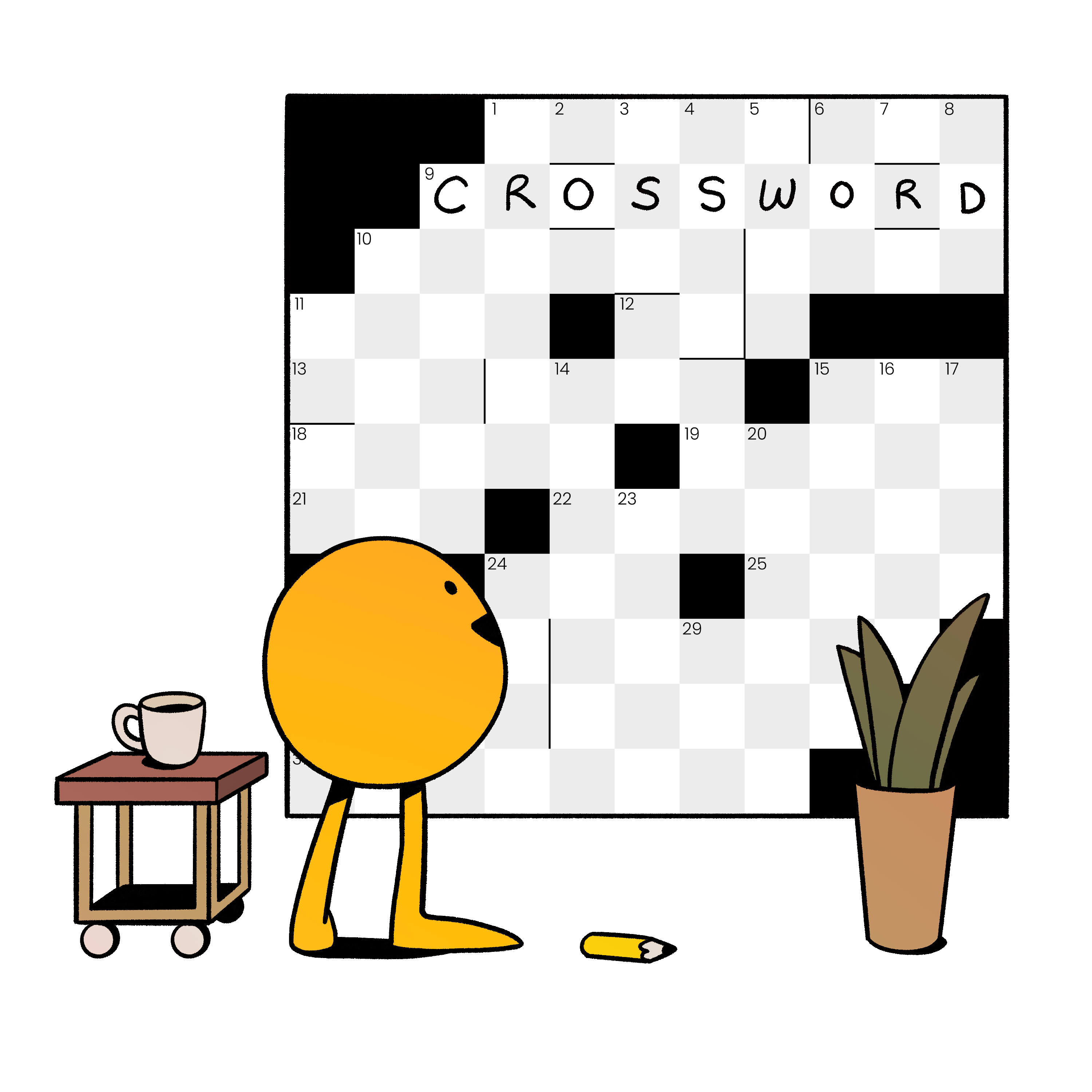
Cross|word
It’s a crossword puzzle, one I like doing. They tend to be smaller grids (“midis,” in the parlance of the crossword crafters), so they only take a few minutes to solve, and the Puzzmo dialect of crosswordese feels pitch shifted to slightly younger ears. I’m more likely to understand the clues based on pop culture references, and there’s a semi-persistent injection of queer culture, too. No complaints here. My favorite puzzle from last year was a heavily horse-themed grid submitted by Lisa Hanawalt.
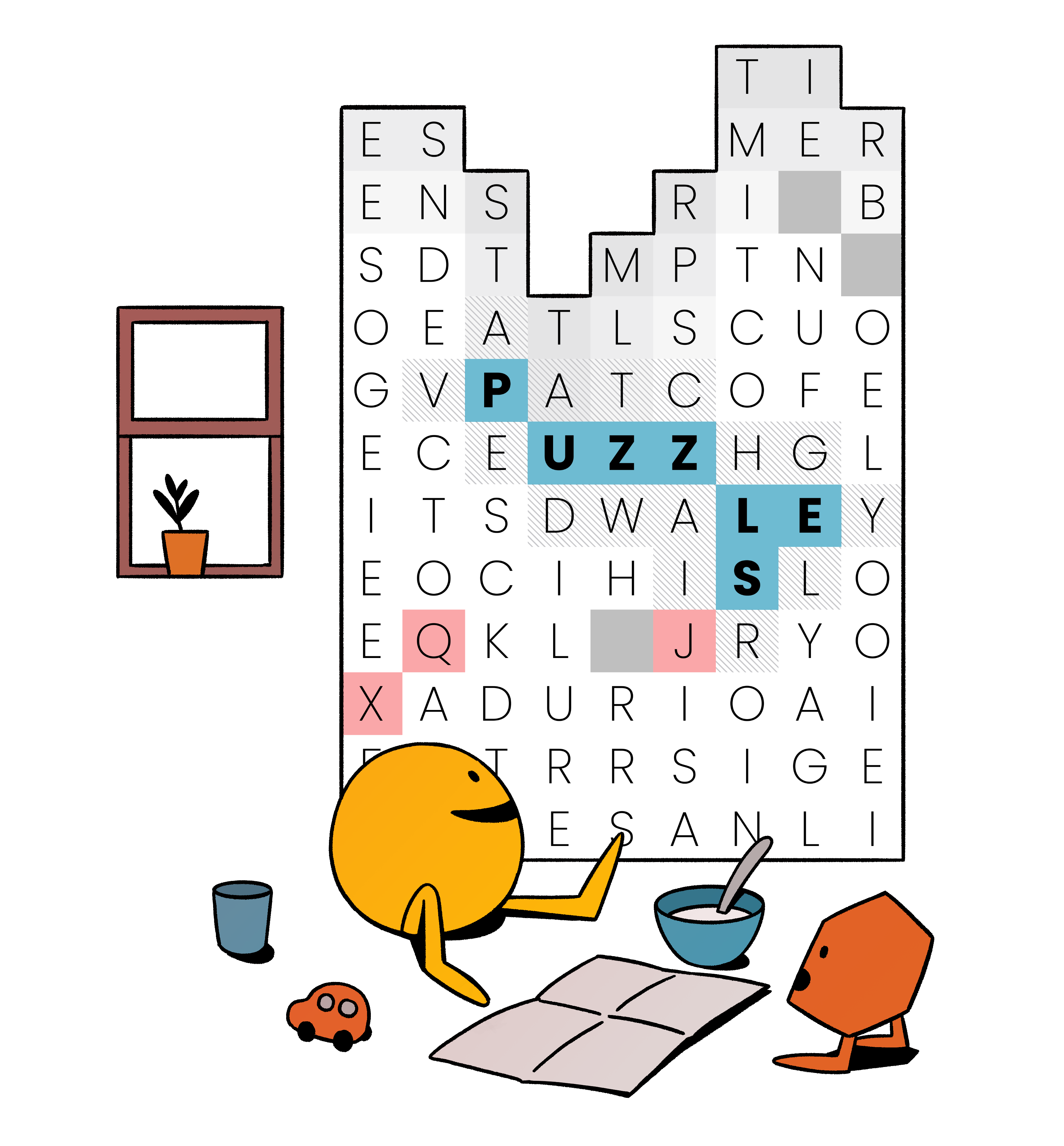
SpellTower
This is one of Zach Gage’s most popular games. It’s basically a word search, except finding a word breaks off adjacent letters, causing those that are left to shift down. Scoring is based on the length of the word and how many letters you can clear at once. You get a bonus for breaking the tower down to just 2 rows remaining, and another bonus for a full clear—which is tough to achieve. There isn’t an undo button, so a wrong move can make it impossible to achieve that full clear. I would usually aim for the 2-row bonus and was satisfied with that. I’ve heard that some people use the preview to solve the puzzle before they even click into it, which strikes me as super try-hardy.
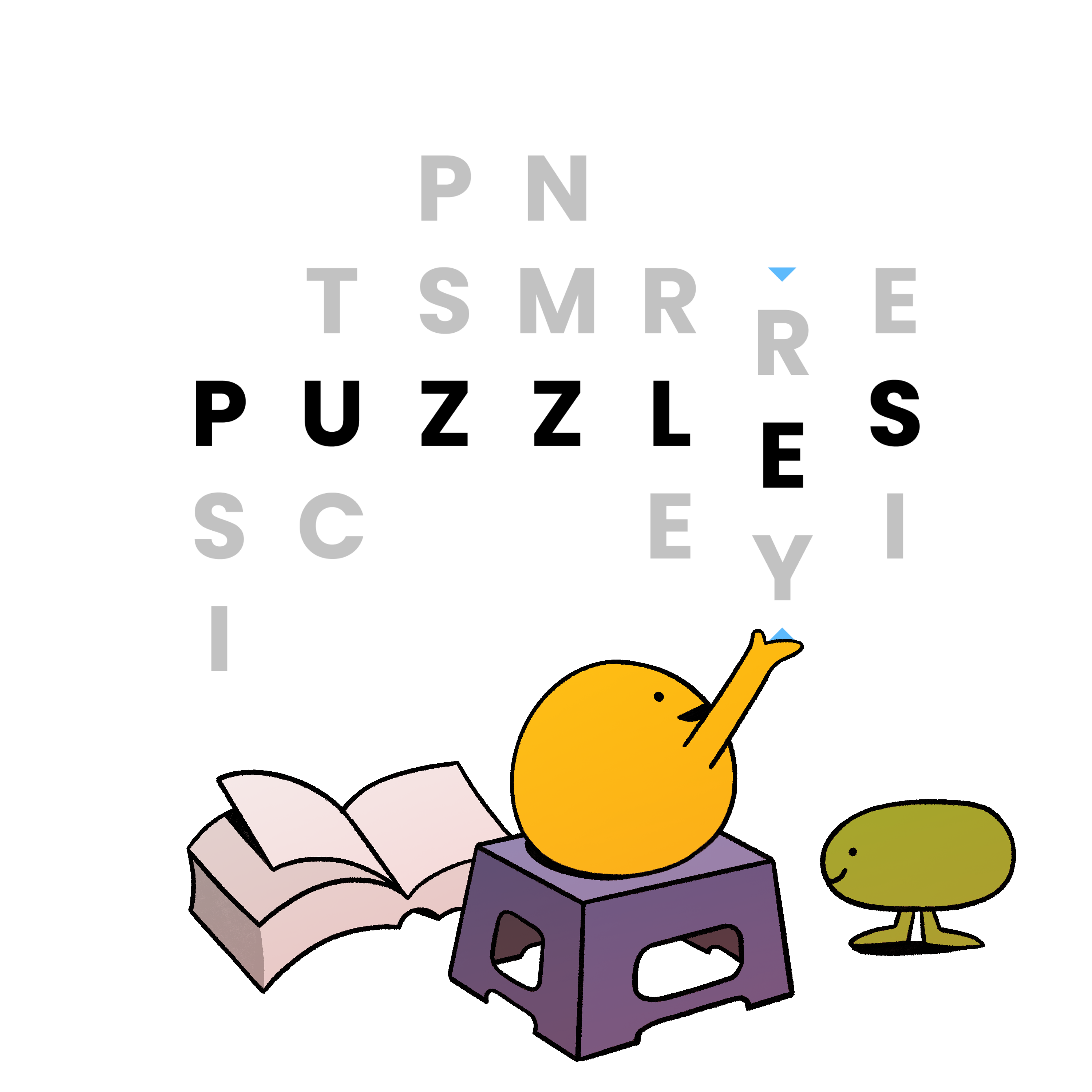
Typeshift
This is sort of like Jumble, except letters are stacked on top of each other in columns. To solve, you need to shift each column up and down until you’ve used every letter. The game keeps track of if you’ve found every “core word,” those being the words used to set the puzzle, but that’s just a bonus—any set of words that uses all the letters is a valid solution. Sometimes they have variants where it’s just 3 columns, or where only every other column can be shifted. It’s not a game that I have much trouble with, and brute force is even on the table. I have a tendency to zone out while doing this one.
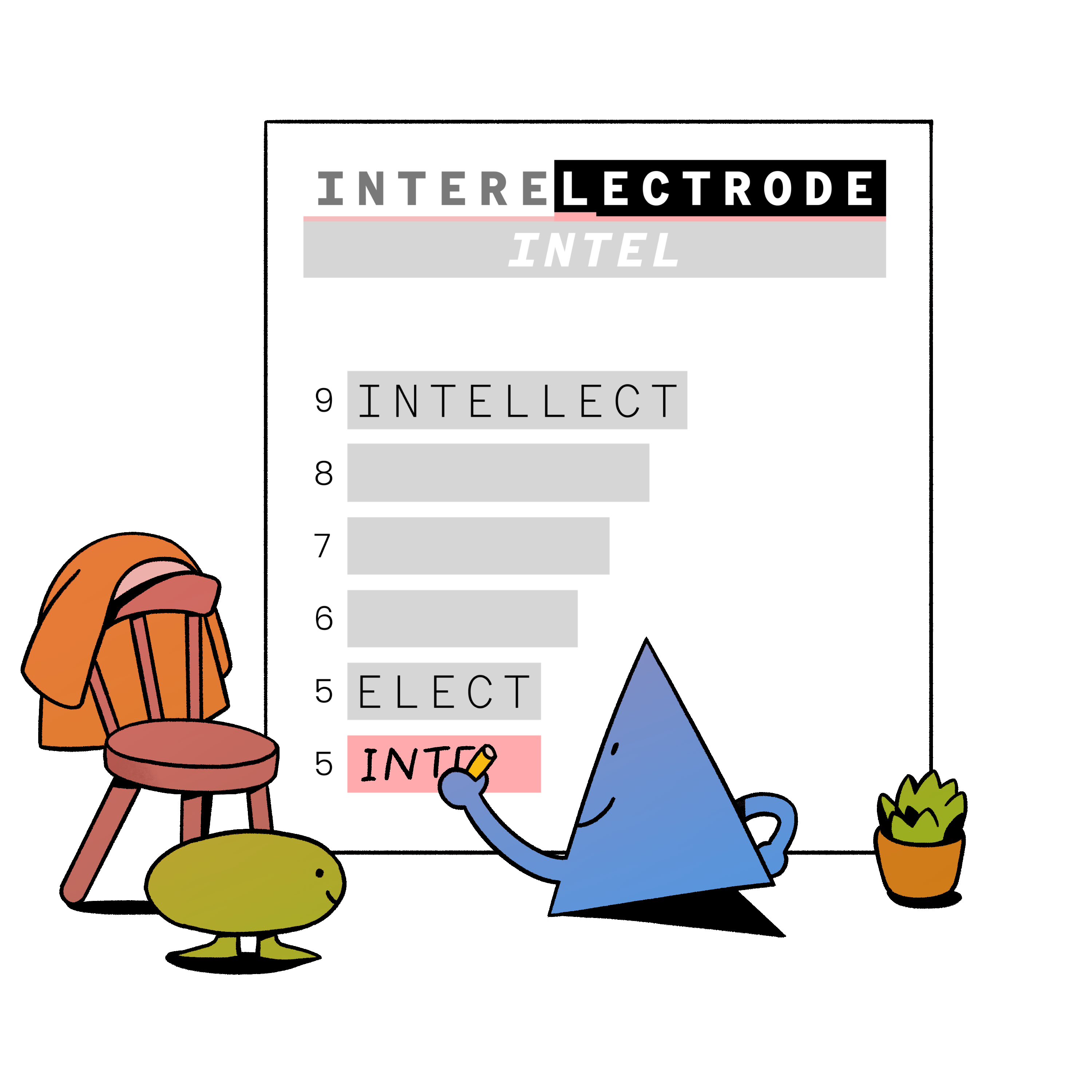
Wordbind
Here, you’re given 2 words. The puzzle wants to see how many other words you can make using the letters from those 2 words, the catch being that you can’t break the order but you can repeat letters. So I might be given “Chancel | Spend” and valid answers could be “Cells” or “Append.” This one is fun, though the given words can often lead to some monotonous answers (lots of abusing common prefixes and suffixes). Not a huge time sink, either way.
Cube Clear
I’m not sure why this puzzle exists. It’s been labeled “experimental” since it was first introduced more than a year ago, and in practice it’s just a smaller, alternative version of SpellTower, except this one does have an undo button. It doesn’t ask much of the player, so it doesn’t take up much time, but that also makes it easy to overlook.

Flipart
Departing now from word games, this is a perhaps too simplistic shape puzzle. There are varied polygons arrayed on a rectangle. Each polygon can be rotated but not moved. The goal is to flip the pieces until they all fit in the rectangle without overlapping. Fewer flips equates to a higher score, though I usually cared more about doing it fast. I’ve found it works best to solve these like a jigsaw, focusing on the border first and then worrying about the middle. Perfect scores are possible, but it’s a bit too easy to misclick and flip a piece you didn’t mean to, which instantly ruins your attempt that day.
Really Bad Chess
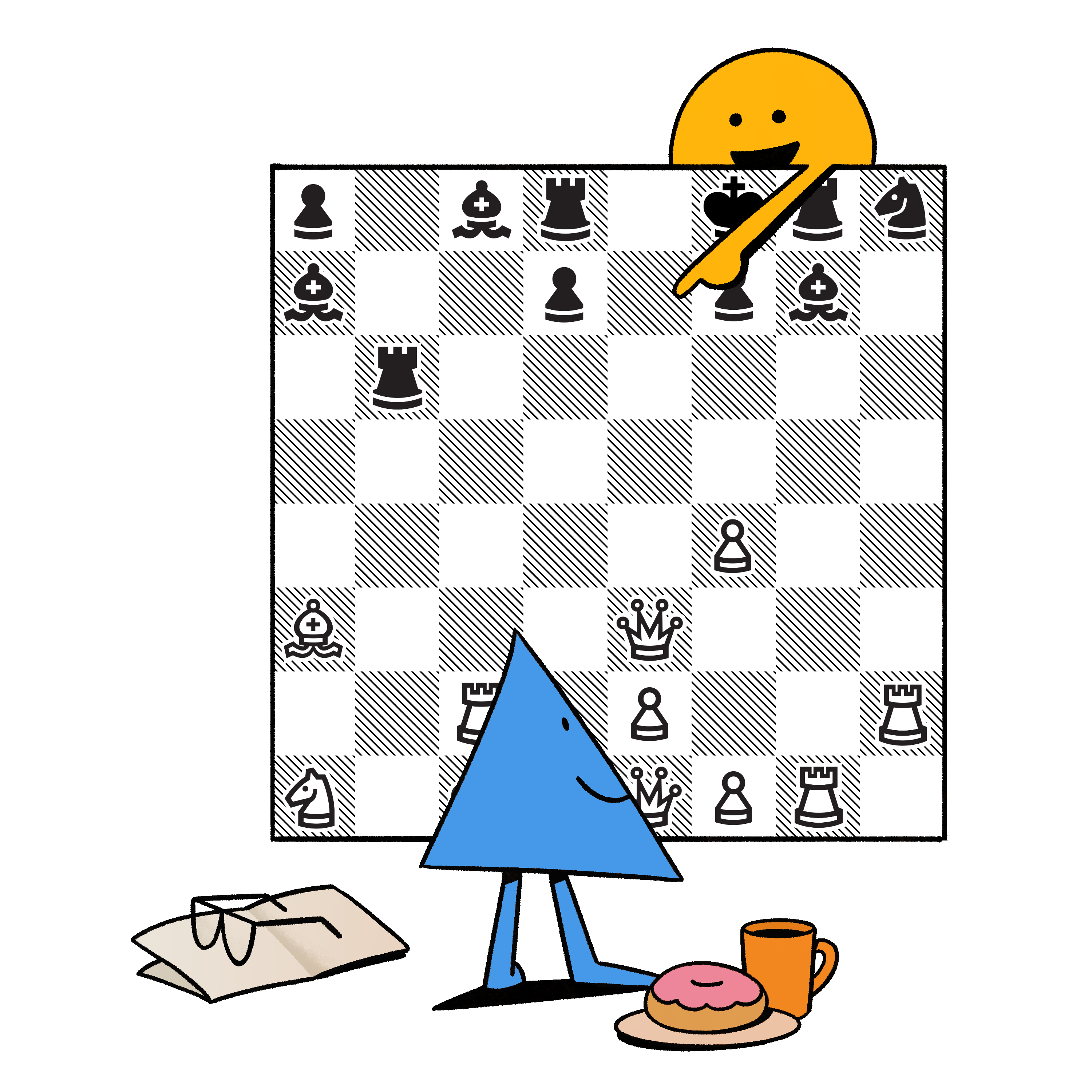
Another game that Gage previously released as a standalone, this is chess with randomized pieces. You might get 5 queens while the bot you’re playing gets mostly knights and bishops. Those are the fun days. There are not so fun days (or variant days where instead the game is Really Hard Chess) where I get to find out that nothing from my very brief chess phase stuck. I just end up moving pieces and hoping for the best. What’s frustrating is getting deep into a game only to realize you can’t win anymore. Chess is so enduring because it’s already so challenging, requiring adept vision and strategy to win. I had days where I was brushing up against the 1:00 am reset, still trying to eke out a checkmate to maintain my streak. Once I realized I was dreading this puzzle each day, I knew something had to give.
Pile-Up Poker / Pile-Up Poker Pro
Balatro is not on this year’s list, but I still spent some time engaging with a not-poker game. Pile-Up Poker sees the player dealt cards with the objective to place them in a 4×4 grid. With each deal, you place 4 cards and discard 1. After 4 hands, the game scores you based on how many valid poker hands you’ve arranged in the grid, counting rows, columns, and the 4 corners. The 4 cards that you discarded can also be scored, but only if you manage to tally up 9 hands within the grid. Your score is a dollar amount, and the game also keeps track of how many quality (higher-scoring) hands you’ve placed. A single round of this would make for a pretty engaging game, but every day you’re tasked with playing 5 rounds, and that accounts for a solid chunk of time if you’re not just throwing cards around. Add in 2 rounds of the Pro version, which has a 5×5 grid and more cards in play (the standard version only uses 6 through Ace), and that’s more poker than I want to look at in a day.
Weather Memoku
This is… kind of a weird one. You can input your ZIP code and this game will fill out a 6×6 grid with tiles based on the local weather forecast. Then, you flip tiles 2 at a time to try and complete the grid. It works like a memory game crossed with simplified Sudoku (like tiles can’t share a row or column). Similar to Flipart, scoring is solely based on how many flips you make. It’s simple enough that it doesn’t feel worth solving, yet it only takes about 30 seconds…
BONGO
The newest puzzle, and we’re back to making words. For this one, you get a pile of scrabble tiles (25 assorted letters + a blank tile). There’s a par score based on the 5 words that were used to set the day’s letters (the game will also tell you if you find one of these words). The goal is to beat par, but they’ve really been pushing the site’s community features with this game. To that end, the highest-scoring words are revealed periodically throughout the day… which I don’t really like. There’s an option to hide it, but if I ignore the leaderboard, am I not putting myself at a disadvantage? On submission, the game also asks if you want to pass your words to a friend to see if they can do better, and no, thank you, I just want to beat par and move on with my day.
===
So, when you tally all this up, I was spending… more time than I wanted to solving puzzles every day (especially on days with a particularly devilish chess board). And for what? To maintain some streaks? To get my money’s worth? Whatever I was getting out of it, it was costing me time.
My solution, predictably, has been to do fewer puzzles. Now, I only touch Cross|word, Weather Memoku (and I’m close to dropping this one), and BONGO most days, and that gives me my fill. If I’m at the airport or in some kind of waiting room, I’m glad to know those other puzzles will be there, archives and all.
Final Fantasy IX / Square / July 7, 2000
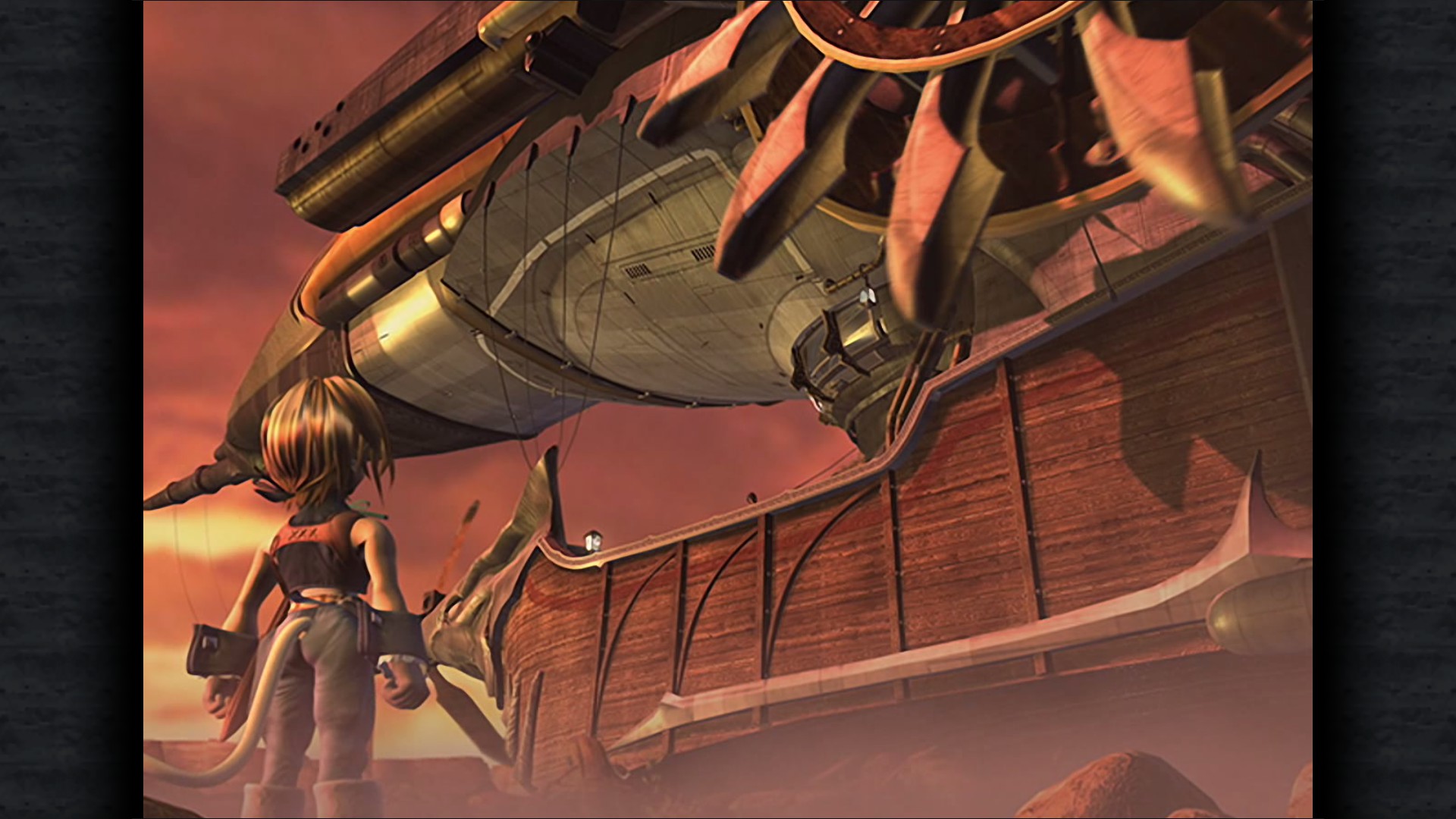
I was 9 when this game first took out a mortgage on a small plot of my imagination. It wasn’t until 2019 when I actually sat down and started playing it for myself. I got very close to the end, but didn’t finish. It was always my intention to return, to finally see the adventure through, and now I have.
But why? Why return? What is it I was holding onto?
Dancing rats. That’s why.
I’m deadly serious, and while I think that’s all that needs to be said, I’ll try to explain.
The last time I wrote about FFIX, I was fixated on the systems. Systems are important, particularly in a classic roleplaying game (RPG)—they’re the thing you touch and interact with; they inform how the game feels to play.
But like I said at the time, a lot of the systems in this game are flawed. Equipment requires constant micromanagement; the economy is irrelevant thanks to the Cotton Robe trick; and Trance frequently squanders your characters’ most powerful abilities on trivial encounters. It’s never downright frustrating to brush up against these systems, but it can nag, like an itch. You might approach a boss fight and think “Ah, it’s time to reorganize my party’s loadouts for the third time this dungeon.”
So if touching this game is akin to irritation, what smooths over those rough edges?
…look, I’ve already told you: dancing rats.
I guess I need to show you.
Now, we are different people, you and I. Perhaps you can watch these rats dance and feel nothing. That’s fine—there’s nothing wrong with that. But it’s possible that what I have to say about this game won’t reach you.
Final Fantasy IX is “Wanderer above the Sea of Fog”: The Game.
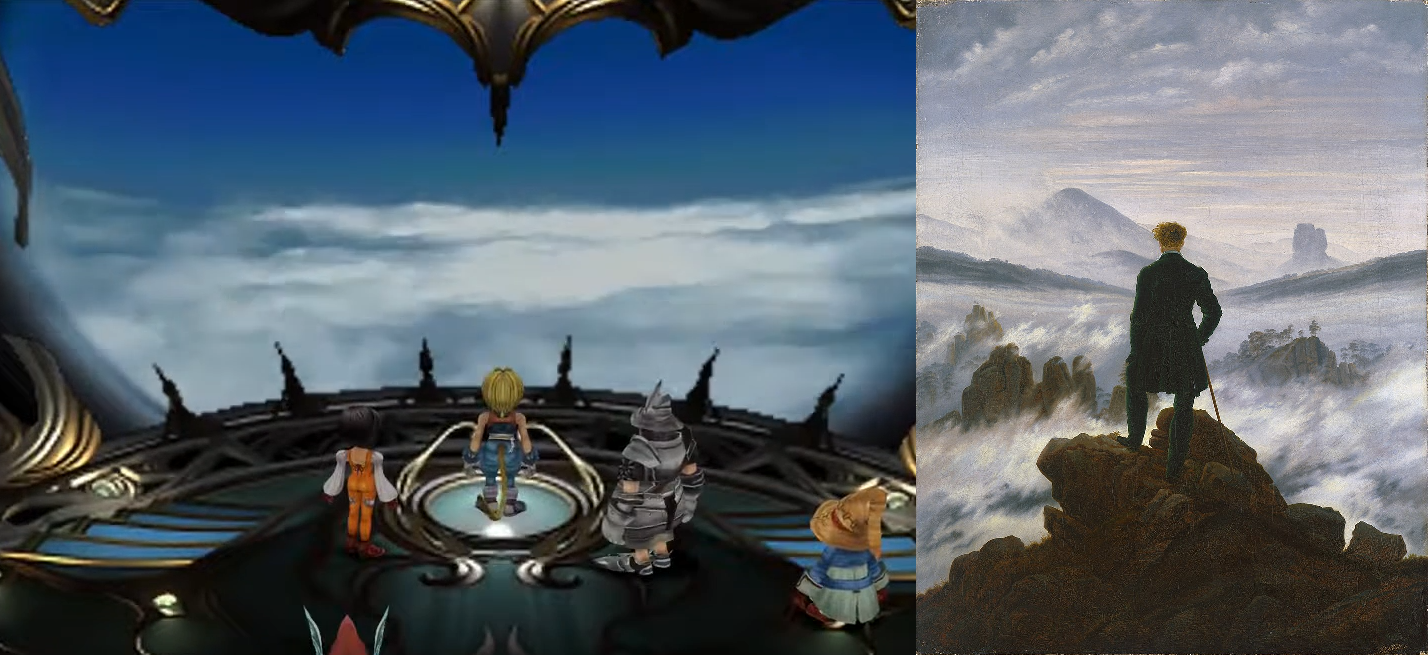
Not only is the primary setting a world that is covered in a perpetual veil of mist, but it is a game powered by Romanticism.
Yes, it romanticizes. It looks back upon the early games in the series as if to say “What wonderful times we’ve had together. If this was the end, it would be a good end, not because of where we’re ending up but because of everything we’ve shared getting here.”
But it also follows the Romantic movement. This game is deeply concerned with heroes, chivalry, souls, and nature. It is obsessed with longing, with how the characters yearn for each other. Everyone in the cast has been abandoned, either by their family or their kingdom or their people or themselves. They are, each of them, desperate to find a place to call home—the place they will return to someday.
The main character is a thief, and his solution (which becomes the player’s solution) is to lean into his nature—he steals everything.
For power, ransack the weapons and armor from your enemies while you take them down. For wealth, rig the system and exploit the market to earn a huge payday. For bonds, rob your companions of their loneliness—never give up on your friends. For love, well… you could try stealing their heart with your roguish charm, but you know deep down you’re better off telling them how you really feel.
And that’s what Final Fantasy IX does, at every turn. It is unflinchingly honest about the feelings that have been put into it. It declares that life is full of beauty and is therefore meaningful. It insists that memory is an object, that it is a shared force of will connecting us all to each other. It sings, to remind you…
A voice from the past, joining yours and mine.
Adding up the layers of harmony.
And so it goes, on and on.
Melodies of life,
to the sky beyond the flying birds—forever and on.If I should leave this lonely world behind,
your voice will still remember our melody.
Now I know we’ll carry on.
Melodies of life,
come circle round and grow deep in our hearts, as long as we remember.
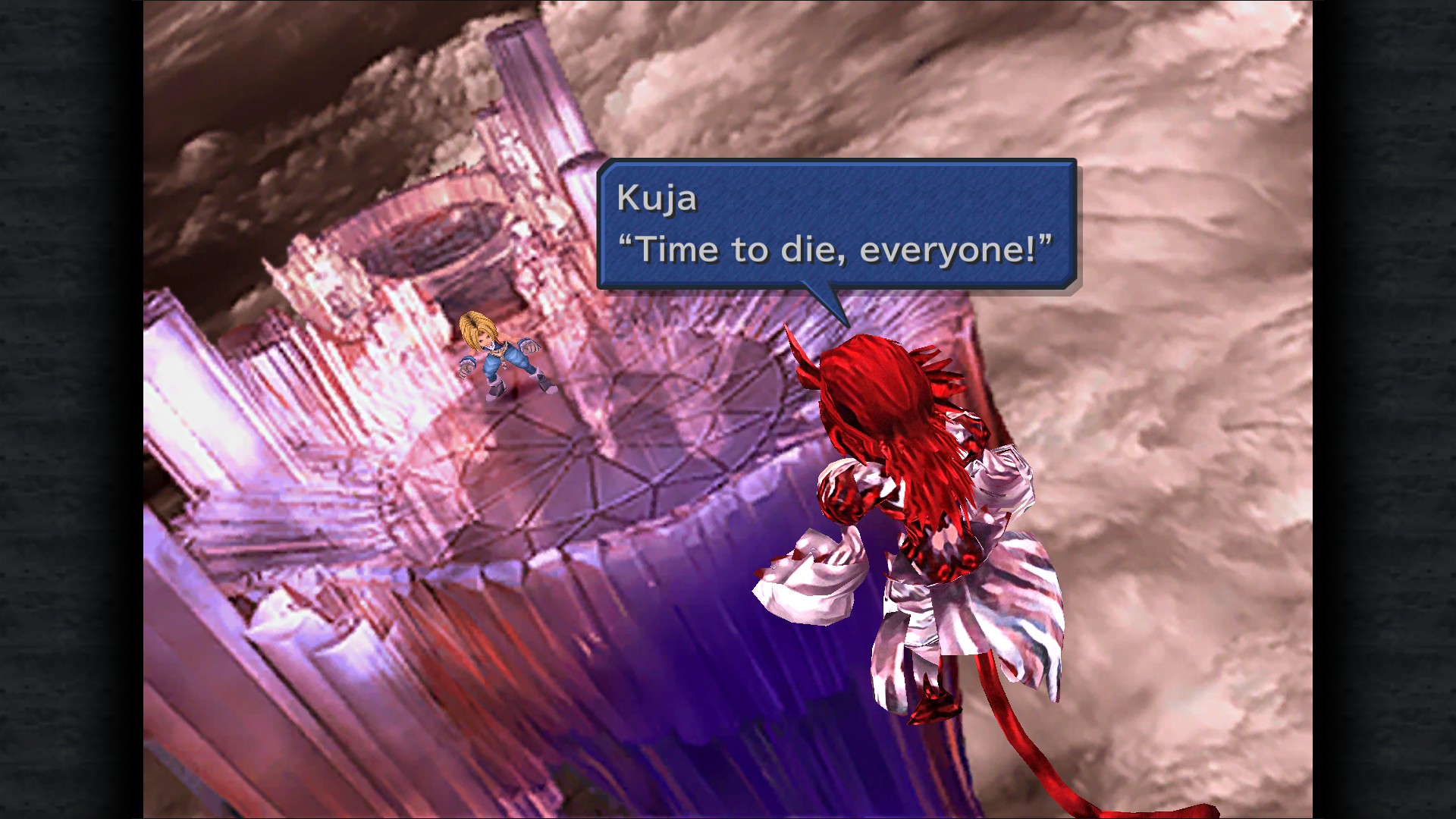
Final Fantasy is in trouble.
At least, it seems to be, if you listen to the money people at Square Enix. The latest games to bear the name, Final Fantasy XVI (2023) and Final Fantasy VII: Rebirth (2024), did not come close to meeting sales expectations. They each reviewed well enough (on release), but they apparently failed to reach a wide (enough) audience.
From what I’ve read, Final Fantasy XVI attempts to take itself very seriously. The developers cited Game of Thrones as a direct inspiration, fueling a story driven by court intrigue and interkingdom politics. They also stepped in it early in the press cycle by claiming that their medieval inspired setting was the reason they neglected to include any characters of color.
Final Fantasy VII: Rebirth is the second installment in the modern remake of Final Fantasy VII, following Remake. By all accounts, it is a game precision-built to inspire joy in the hearts of people who played the original. How could it falter?
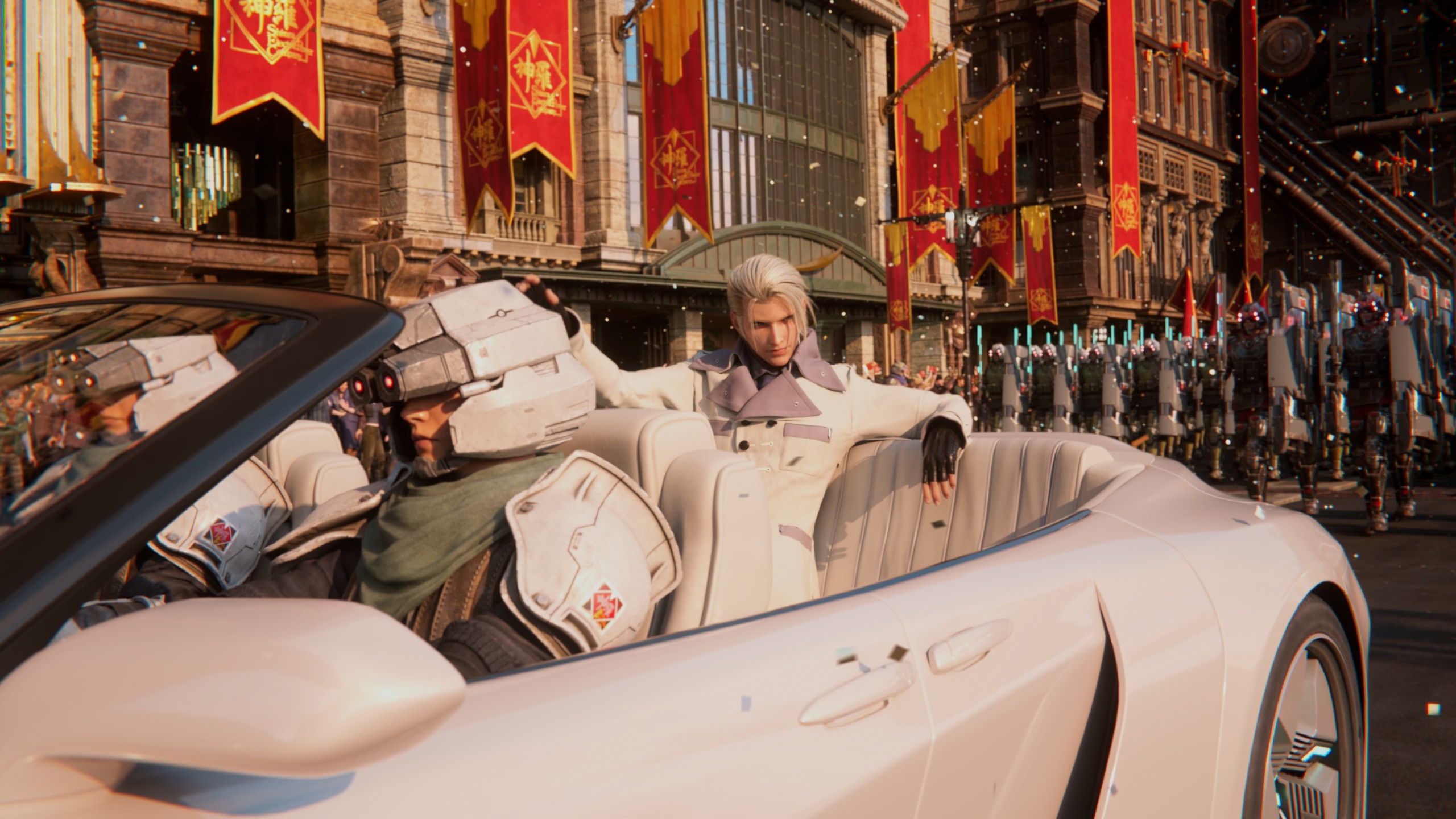
To start with, sequels are not guaranteed wins in the video game industry—a bigger budget can be hard to earn back if too many people skipped your first 30-hour game to be interested in the followup. We also have to consider that for all the FFVII fans who loudly asked for the game to be modernized, there were plenty who didn’t see a need. And then for every fan who played and loved Remake, there was another who played it and disagreed with how it was done.
That’s because Remake and Rebirth are not just remaking FFVII. Although many veterans of the original returned to lead development of the game, they didn’t want to do the same thing but prettier. These games are billed as “the unknown journey”—they want to keep people guessing, even if the end result is a more similar story than any changes might suggest.
Compounding the issue of performance, both XVI and VII: Rebirth were exclusive to Sony’s PlayStation consoles on release. XVI has since released on other platforms, and VII: Rebirth just released on PC (Square Enix was so desperate to move copies of VII: Rebirth that the game was available to pre-order on Steam at a 30% discount). The series has enjoyed a close relationship with Sony in the past, but that strategy doesn’t seem to be paying off anymore, not in the current market. Indeed, the only immediate change Square Enix has hinted at is that they won’t be taking exclusivity deals for future releases. (That seems to be the right call.)
But Final Fantasy was already on the decline prior to the most recent games.
Final Fantasy XV (2016) had a long and tortured development, culminating in an uneven game that could barely be called complete when it came out.
Final Fantasy XIII (2009) and its attendant sequels are probably the most unpopular titles in the series (A friend of mine reopened some deep psychological wounds when recounting his experience with the game).
Final Fantasy XII (2006) is a game with vocal defenders, but I’ve never met anyone who actually played it.
And then Final Fantasy X (2001) represents the peak of the series in terms of sales and, for the time, spectacle. It is after X that the decline began.
I’ve left out Final Fantasy XI (2002) and Final Fantasy XIV (2010-present), both of which are massively multiplayer online (MMO) RPGs. While some people regard XIV as the actual best Final Fantasy game, saying so only gets you so far. By its nature, it may keep performing and bringing in revenue, but MMOs have a ceiling—they remain impenetrable or unaffordable (money or time, take your pick) or unappealing to people like me that think gameplay ought to require more than pressing several buttons in order on loop.
Having said all that… what is to be done? What does this mean for the future of Final Fantasy?
Is it time for younger hands to steer the ship? Should Square Enix tap some promising up-and-comer to direct XVII? Maybe we should blame the Zoomers for caring more about Fortnite than Final Fantasy. Maybe the series needs to go out of its way to appeal to them.
Does the series need to try romanticizing itself, as FFIX once did? I worry that modern game developers would instead cannibalize what made the series special in order to bait an audience with nostalgia, though admittedly that’s a fine line. Plus, that’s already happening with the FFVII Remake. What once was a series that reinvented itself for every new game has given into the pressure to look backward and recollect.
They could simply stop altogether. One of these games, they’ll have to make good on that “Final” part.
Maybe that’s halfway right.
If I had my druthers and the publisher could be convinced that Final Fantasy is a more niche series now, one that cannot constantly be expected to outdo itself, I would hope they keep making these games for as long as they can.
I hope they keep moving forward, telling new tales, building new worlds, and planting new seeds of imagination. There are apocryphal stories about how the series got its name, but the spirit therein feels suitable for a guiding philosophy. Treat every Final Fantasy like it could be the last one.
From the beginning, the path has been crystal clear.
Helldivers II / Arrowhead Game Studios / February 8, 2023
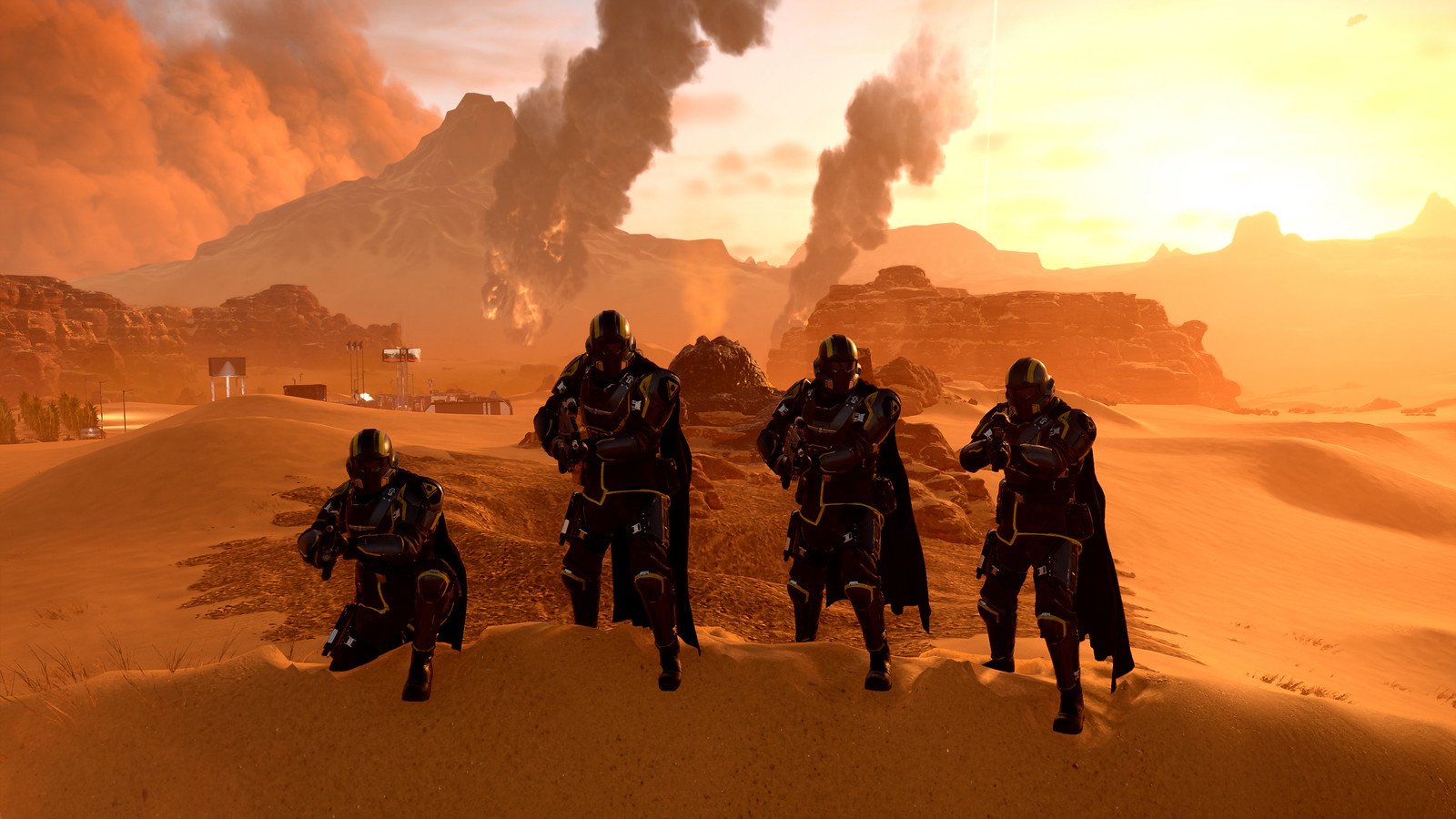
If this game didn’t know exactly what it was doing, I’m not sure I would enjoy it.
Previously, the Halo series is about as close as I would get to a game that wants you to play army. The Master Chief is surrounded by other marines and has plenty of his own baggage, but he at least gets to fight aliens with a cool laser sword (and even better, you get to play as one of those aliens in Halo 2).
Metal Gear games also come close to crossing a line, but they’re all gonzo enough that they earn a pass.
You won’t catch me playing a game like Call of Duty or Battlefield or anything else that makes you into a soldier, though. I am, at this point, repelled by patriotism, covert ops that purport to protect national security interests, and anything that smacks of duty, service, etc. It’s difficult to want to paint the military as laudable when yours is a country that pantomimes soft power while holding a gun to the head of all the countries it plays hegemon to.
An exception to my aversion would be Spec Ops: The Line, which I played not because it was any fun but because it had something to say about the horror of war and the greater horror of blind faith in a mission.
Helldivers II also has something to say, which is that playing army is tantamount to buffoonery and, in some cases, congruent with fascism.
For all intents and purposes, Helldivers is an unlicensed adaptation of Starship Troopers, though it takes every opportunity to try and insure the player is in on the joke. In the world of the game, there is no higher calling than to serve Super Earth, and there is no greater service than to die for Super Earth. And you will die, whether by fighting killer insect swarms or communist murder robots or more likely in some unfortunate (but unavoidable) incidence of friendly fire.
As the elite fighting force of Super Earth, no expense is spared when outfitting the Helldivers (except for any expense that might make their arsenal safer to wield).
Automated turrets.
Tesla coils.
High caliber barrages.
Aerial bombardments.
Orbital lasers.
Reinforcements.
These are only some of the high-powered stratagems at your disposal. They’re meant to be brought to bear against your enemies, but they are regularly aimed at you instead, either because a turret landed facing the wrong direction, a squadmate didn’t see you in the path of their bombardment, or someone thought it would be funny.
It is. Every time.
That’s why the game works. Not because the Helldivers chest bump each other while celebrating victory for managed democracy. But because of the way they scream when they are torn apart by freedom-hating bugs, and the way their capes flop over their heads when they perform a flailing dive for cover, and all the other ways the developers found to make you feel as silly as possible for even thinking a uniform could make you look cool.
Dungeons & Dragons (5E) / Wizards of the Coast / July 3, 2014
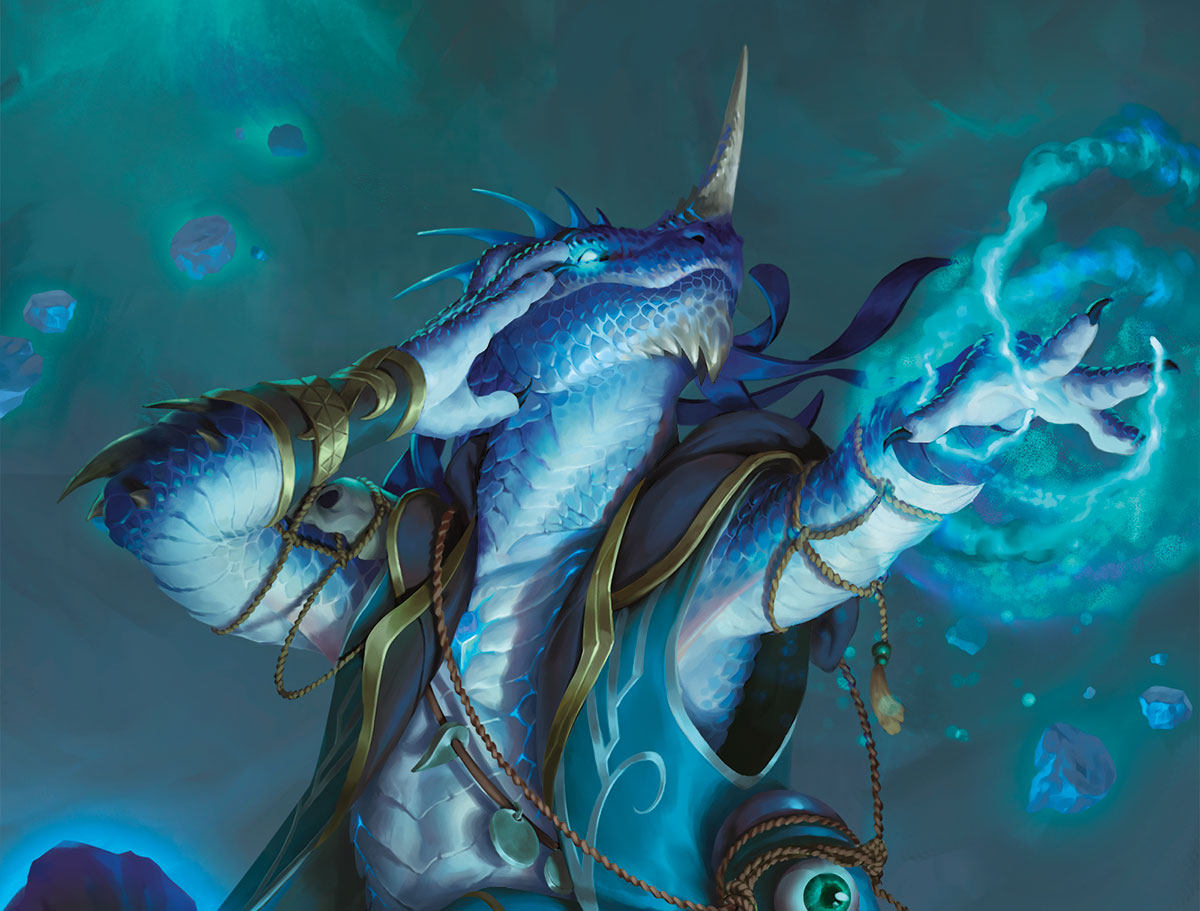
I haven’t got a lot to say about the game Dungeons & Dragons at this point other than I am still playing it with my friends on a regular basis.
Wizards of the Coast continues to be somewhat dubious stewards, awkwardly rolling out updated rules last year while letting the upkeep of D&D Beyond (one of the primary platforms we use to play) fall by the wayside in favor of a flashy and underwhelming virtual tabletop.
But I’m just a player, and I don’t want to spill ink over the business of the game or its rules.
No, I just want to talk about my characters instead.
First, there’s Agnika, a proud leonin warrior and self-proclaimed champion of the sun. As an Oath of the Crown (Corona, if you will) Paladin, her stated purpose is to shield those in need from the shadowy forces that threaten the realm. In the case of our campaign, that means standing opposed to the smug elf (oops, redundant) lady who wants to destroy the world. For our party, she does what she can to protect our more fragile members and steps up when needed to eradicate enemies with a well-timed smite. But her most useful trait is her ability to pick a direction and start walking when others would rather stand around.
Then, there’s Raven, a warforged Arcane Archer who is forged for… well. He’s older than a lot of the walking talking metal men you see out there, and his memory has suffered for it. Not just his memory, matter of fact—his whole frame has seen better days. He’s still a certified deadeye when you put a bow in his hands, though. Now, it’s taken some convincing for him to want to track down those memories. Adventuring is meant to be fun, and some things might be better off forgotten, y’know? But remembering stuff is probably the only way he’ll ever be whole again, so sure, let’s follow some strange signals, see where they lead. Maybe save the world while we’re at it.
While those two are my main focuses, that doesn’t mean there aren’t others waiting in the wings. In December, I unleashed Emyr Brockhardt on a one-night adventure. Emyr is a shifter, modeled after the Badger Lords of Redwall fame, and he represented a stirring opportunity to try out Barbarian while testing the upper bounds of my microphone’s range.
And last of all, there’s a wee rabbit that hopped out of my head last autumn who is finally going on his first adventure soon. Ser Bramble Braebuck is another Paladin, though unlike Agnika he belongs to a proud order of dragon knights. Many of his fellows look down upon him for being a harengon (and because he is only 5’3”), but still he yearns to prove himself. And so he shall.
People talk sometimes about the collapse of the Third Place. After working from home for 5 years, I don’t even have a Second Place. But maybe that place is D&D.
Maybe it’s when I’m sitting At The Table.
Little else asks me to shift out of neutral and turn off my factory default settings. When I need to get ready to sit down and step into the role of someone with real purpose, to inhabit a world where problems can actually be solved, I have to dig deep. I have to journey to the place within me that still believes I could tell stories, too.
Dragon’s Dogma II / CAPCOM / March 21, 2024
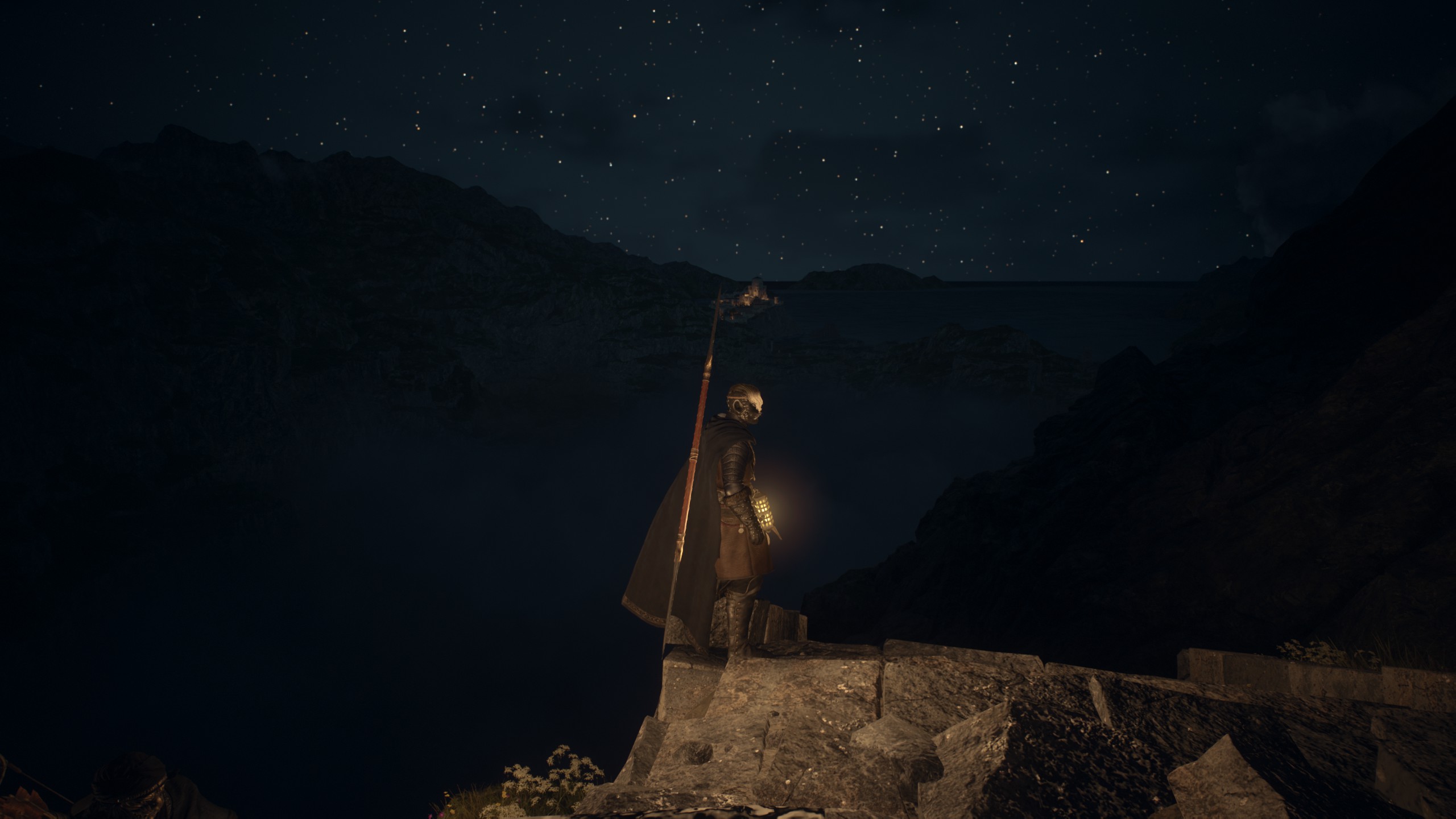
Dragon’s Dogma does not want to tell you a story.
It will do it, if that’s what you demand. You will meet characters playing expected roles—the sheltered prince, the leal captain of the guard, the scheming queen regent, the power hungry sorcerer, the dragon—and following their whims will help you traverse the world from one end to the other.
None of those characters will follow you on your journey. They’ll stay in the capital while you strike out into the wilderness or catch an oxcart to the border.
But neither are you alone.
Playing as the Arisen—the destined hero chosen by the dragon—you are accompanied by strange beings known as pawns. They are as varied as the leaves on the trees and look for all the world like normal people, but they all share one trait: They are completely loyal to the Arisen. It is your will that gives them purpose and your word they obey (…for the most part). Further, they emerge from the Rift, the place between worlds. So while you will always travel in the company of your pawn, you may also choose to travel with the pawns of other Arisen (other players).
It is the pawns, therefore, who guide your experience with Dragon’s Dogma. They know the roads, know the places where you might find aught of use, know what threats you’re likely to encounter on the high path compared to the low one. They pick you up when a minotaur has bowled you over, and they pat you down if a drake’s breath catches you on fire. They are the ones you will go out of your way to recover if they slip and fall into the brine. And they will be your companions anight by the campfire, trading gossip from this world or the next and tearing into freshly seared scrags of beast.
Dragon’s Dogma knows that your pawn is your closest companion. It knows, and it taunts you for it. Because when the dragon finally appears and demands you answer his dogma, who does he grab? He threatens the life of Ser Ulrika, or Captain Brant, or Prince Sven, or some other character you’ve had half a dozen conversations with. He says, “Come, Arisen, come to the defence of the one most precious to you. Strike me down and set the world to rights. Will thee not fulfil thy fate?”
Of course not.
The game is bluffing, and if you call it…
…that is when Dragon’s Dogma II begins.
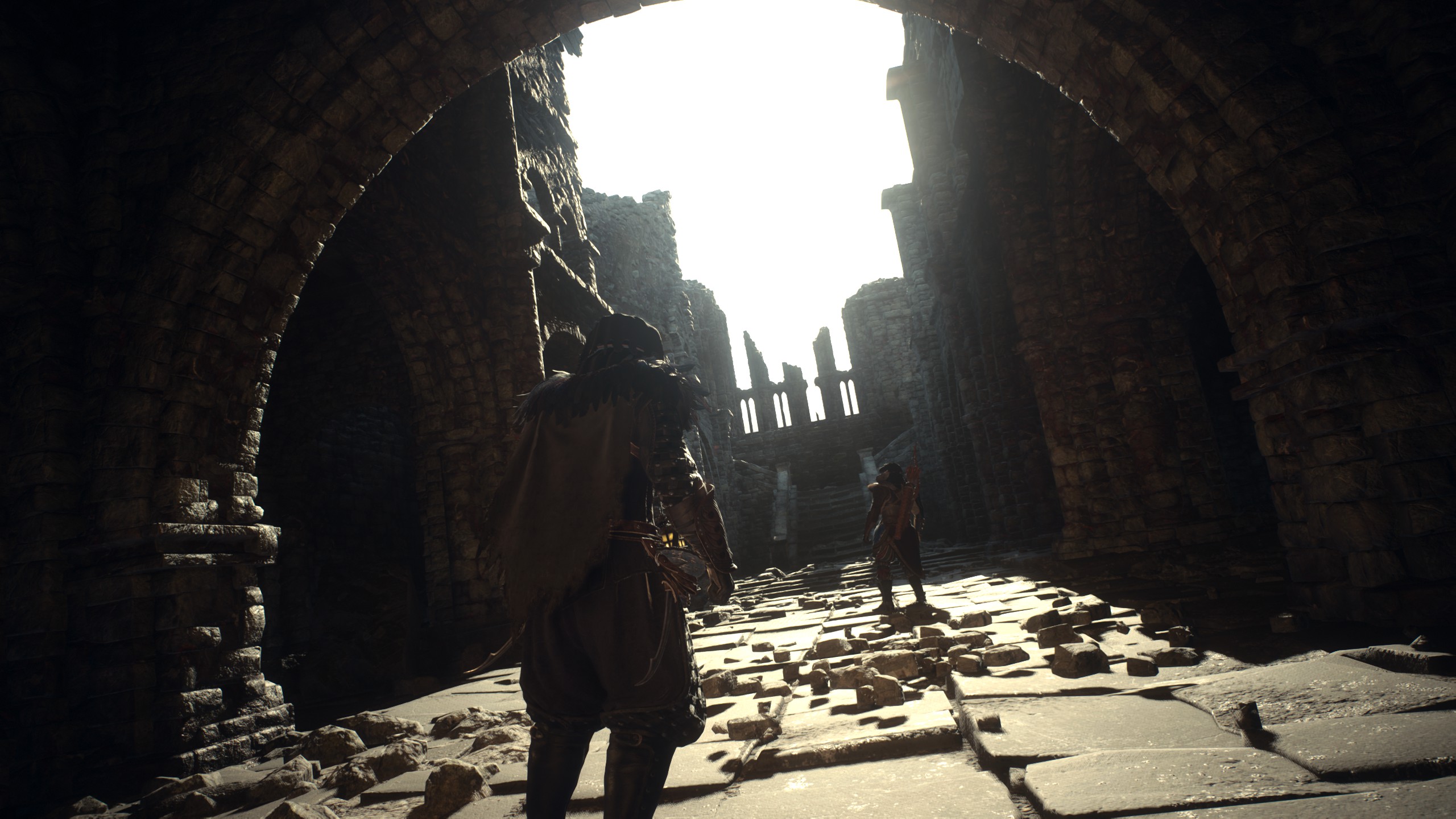
That lofty summary is where I would like to leave my thoughts on Dragon’s Dogma II, but in practice I don’t think it quite lives up to this sort of idealized vision. In theory, I think this is what they’re going for, but the execution might have butted up against some development constraints.
There’s enough game leading up to the turn, giving you plenty of time to endear yourself to the pawns and to the world. I had a great time shunning fast travel and hoofing it all over Vermund and Battahl. I have vivid memories of my adventures, like the time I was about to bring down a cyclops only for a gryphon to descend from the sky, pluck up my pawn (who I named Agnika, after my paladin), and fly away, forcing me and my weary party to give chase.
But after the game shows you its hand, the world gets smaller instead of bigger. The stakes escalate commendably, but the payoff isn’t quite there—at least not compared to what I felt was a memorable confrontation at the end of the first game.
It’s still a swing that I admire, and I can see myself coming back to the game at some point, but I was surprised and maybe a little disappointed to move on as quickly as I did.
Destiny 2: The Final Shape / Bungie / June 4, 2024
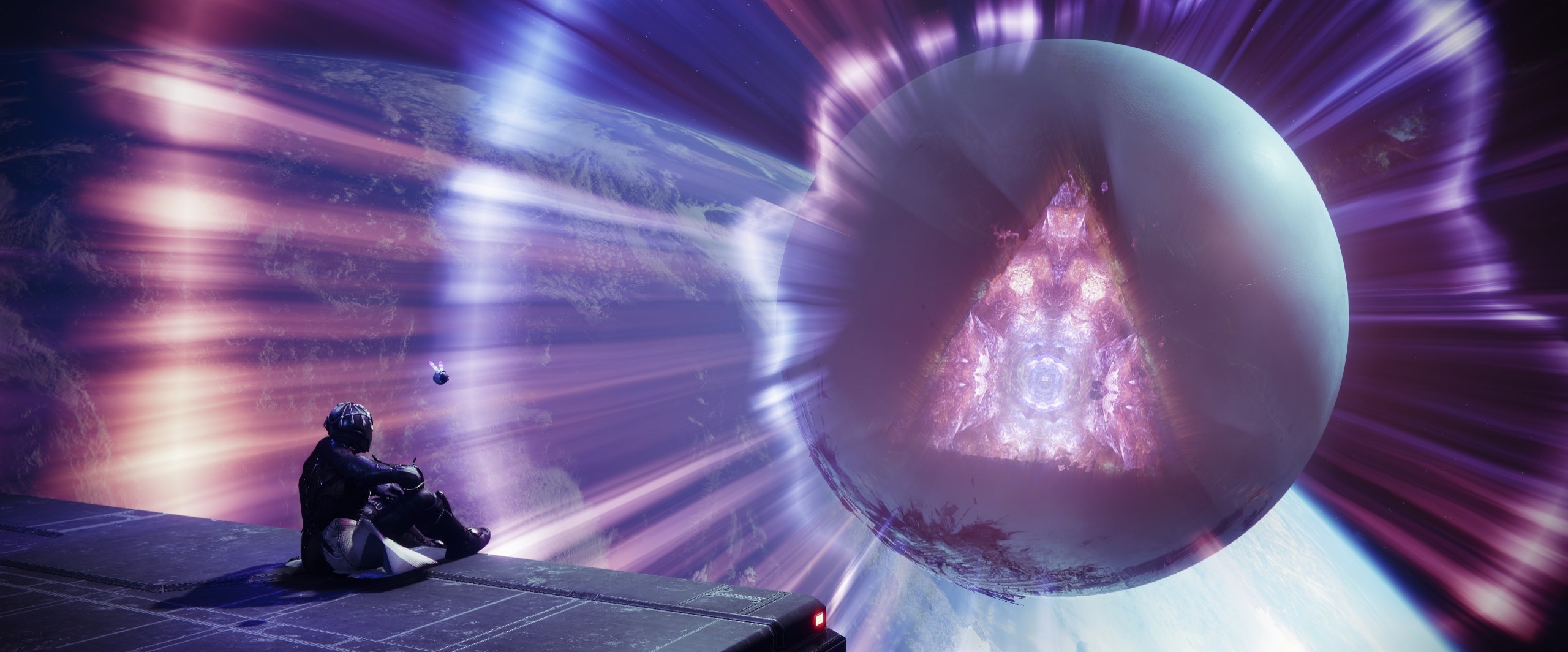
I’m mulling (read: have a vague notion to which no words have been committed) a broader retrospective on 10 years of playing Destiny, but of The Final Shape I can at least say that it was a worthy conclusion to the saga. It filled me with the best feelings that I have had about the game in some time, and it’s plain to see that it was some of the finest work yet by the developers at Bungie.
In the weeks following The Final Shape’s release, the studio was once again decimated by layoffs.
Elden Ring: Shadow of the Erdtree / FromSoftware / June 20, 2024
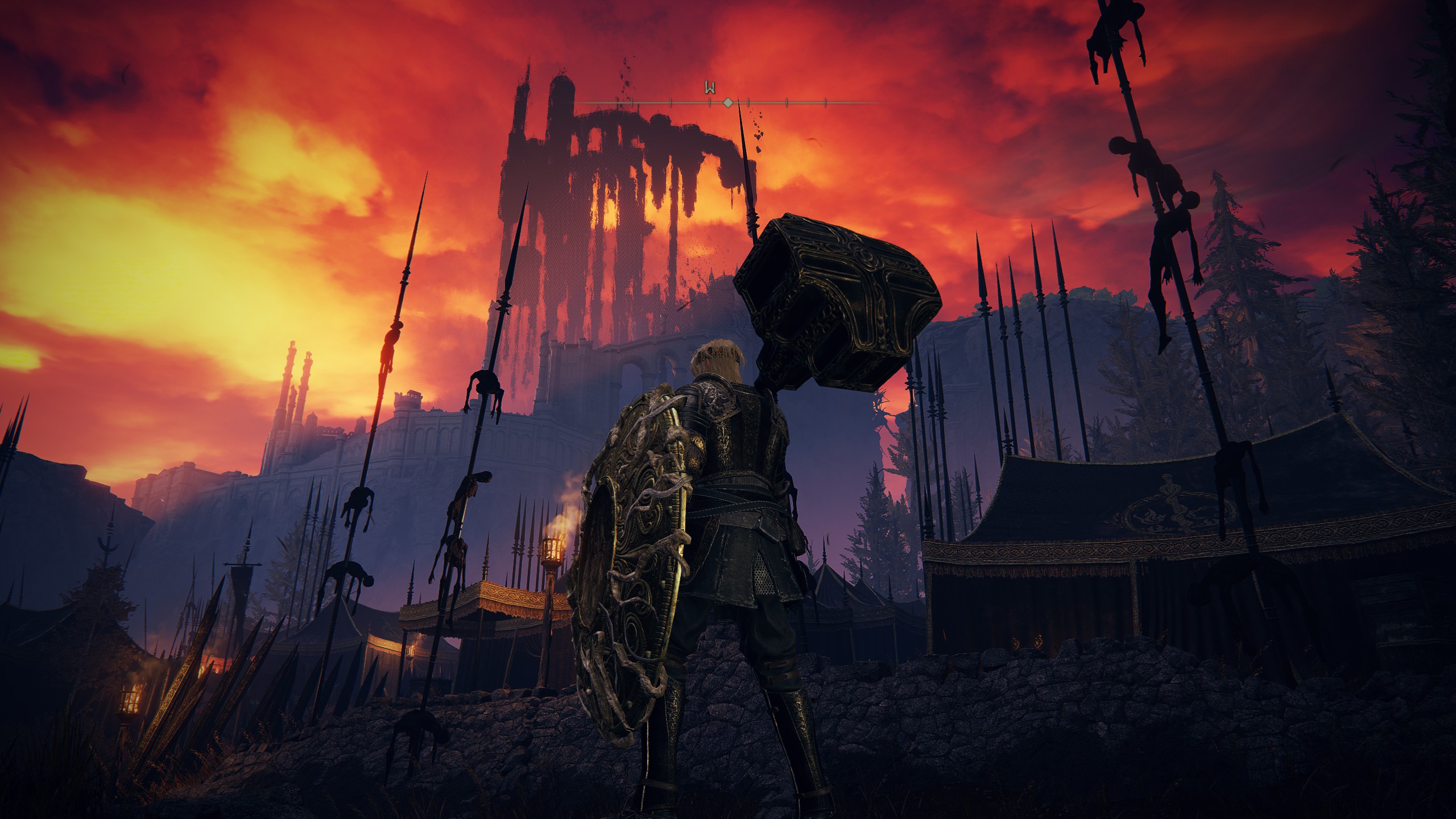
FromSoftware has, at this point, a nearly 15-year record of using downloadable content to improve already excellent ideas, so an expansion to Elden Ring was never going to be less than superlative.
Shadow of the Erdtree does, however, represent something of a logical endpoint.
Shadow is a tighter and more focused version of the “open world Dark Souls” concept of Elden Ring. The landscape and vistas are as breathtaking as before, the pathways throughout the world are more baffling and twisted, the dungeons are deeper and darker, and the bosses are more relentless than ever. And perhaps you could take all of those knobs and keep turning them, but I think if they aren’t already maxed out then they’re very close.
So what comes next?
More Elden Ring? Sure, if that’s in the cards.
Elden Ring sequel? Might want to think about that one…
And that appears to be what FromSoft plans to do. In December, they announced Nightreign, a standalone spinoff of Elden Ring, which should be a decent diversion to fill the space between here and whatever the studio’s next major release is.
I just can’t help but wonder what that major release is going to be. My guess is they will step back and to the left with something more in the vein of Bloodborne or Sekiro, something that is still recognizably FromSoft but that drives more like an F1 car than the full-size, top trimline SUV that is Elden Ring.
Or they can make another Armored Core and I’ll be happy as a clam, the rest of you be damned.
Risk of Rain 2: Seekers of the Storm / Gearbox Software / August 27, 2024
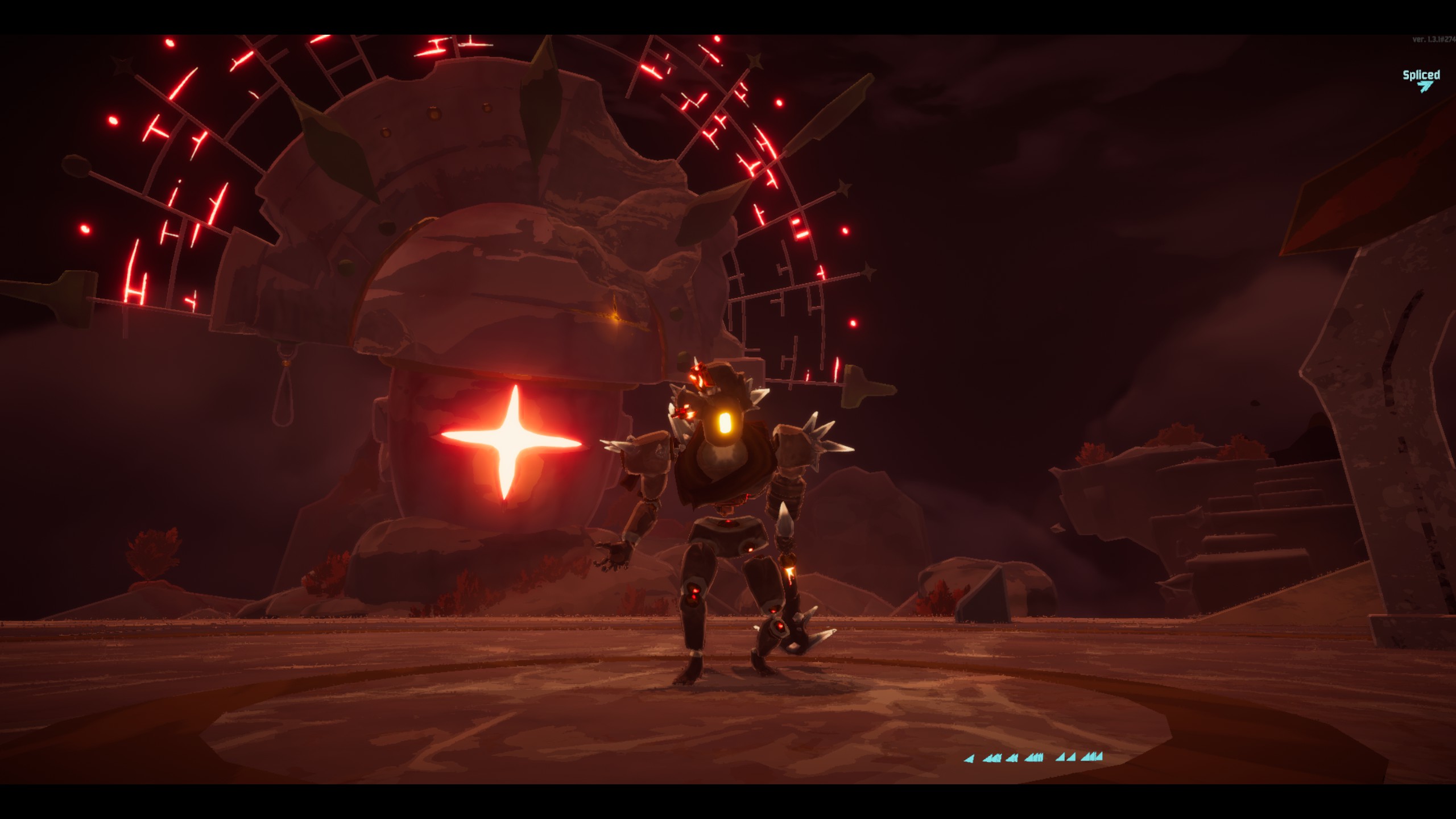
I finally killed the crab.
Several times, in fact, which is a testament to the tumultuous year Risk of Rain 2 has had.
Long story short, the original devs sold the rights to the game to another publisher, that publisher had a skeleton crew of devs gin up a new expansion, the expansion released in a state that was so undercooked it makes sushi look well-done, and now the new devs have had to put out a roadmap for how they’re planning to fix what they broke. Step one of that roadmap was to rework most of the powerup items (the most important part of the game) added in the expansion. Now those items are so strong that the game is easier than it has ever been.
Hence, crab dead.
On reflection, Risk of Rain 2 is something of a miraculous prototype that comes so close to not working. As co-op action roguelikes go, it’s not a great co-op game, it’s a pretty fun but at times frustrating action game, and it’s a little dubious as a roguelike.
Let me unpack that.
When you play this game with friends, loot isn’t shared—you need to decide who gets each item. That’s interesting on paper, but in practice every player wants every pickup, so each stage plays out like an undeclared race to see who can open more boxes.
The biggest sin of Risk of Rain 2 multiplayer is that someone who dies is unrecoverable. The only way for them to live again is to advance to the next stage, which skews the balance of power toward the person who is alive and can still grab items and away from the person who is dead and gets nothing.
For a game where death is swift, brutal, and frequent, that’s damnable.
As for the action, it’s fun to move around and kill monsters. Each character feels unique, so there’s variety if you want it or a comfortable niche to find if you don’t. But after logging enough hours, you will notice that runs tend to end one of two ways, and here I have to speak to the roguelike-ness.
I tend to view roguelikes as games about moment-to-moment decision making. I’m offered 3 cards, I take 1, the engine I am building improves. My upgraded build allows me to clear the next challenge and arrive at my next decision.
The player does not make many decisions in Risk of Rain 2. What the game does instead is it presents you with the challenge (survive, slay monsters to earn money, spend money to open boxes) and then the game decides at random what upgrade to reward you with. This highlights how the concept of builds are different (and somewhat nonexistent) in this game.
In another roguelike, a good build revolves around the interplay of synergies. I take a card that deals poison, another card that doubles how much poison an enemy has, and another card that transfers poison from one enemy to another. I continue taking cards that will support my poison build, thus narrowing my focus.
Risk of Rain is more about balancing a triangular hierarchy of needs. To win, you need mobility, you need healing, and you need damage. At times you can take a “pick 2” approach to this trifecta (e.g. you need less healing if you think you’re too fast to be hit), but more often than not you want a healthy balance of each. However, as I’ve already explained, you don’t usually get to choose what item you get. Most of the time, you open a chest or you kill a boss, and a slot machine decides how much power to give you.
There are macro decisions to make. How long will you spend on each stage before moving on? Which character did you pick? When you went to the shop after Stage 3, which Stage 4 did you choose? …you didn’t do that? Hmm, interesting, interesting.
Ultimately, the run is decided less by how you play and more by what kind of power happens to appear in front of you.
Which brings us back to the two most common outcomes for a Risk of Rain 2 run.
Scenario A: You receive a balanced trifecta. Congratulations, you’re now a demigod. Enemies will explode the moment you load into a stage, and boss health bars will disappear in the blink of an eye. Just beware of the flying lunar chimera—those things don’t care how powerful you are. The run is yours to lose.
Scenario B: Your trifecta is lacking. You cannot kill monsters faster than they spawn. You cannot escape from the hordes that chase you. You cannot survive the blows that rain down upon your body. The planet sups on your flesh and your name is forgotten. Victory was just an old joke the captain told you during the long voyage to get here.
With all of that in consideration, the game is still fun. That’s why I say it’s somewhat miraculous.
I also said it’s a prototype, which has nothing to do with any germinal ideas about a Risk of Rain 3 floating around out there and everything to do with what is to come. Perhaps you haven’t heard, but we are at this very moment entering:
The Year of Games That Are Co-op and/or Action and/or Rogue-lite
“…what are you talking about?”
I’m talking about
- Elden Ring: Nightreign, a co-op action game with rogue-lite elements
- Monster Hunter: Wilds, a co-op action game that probably doesn’t belong on this list but I will fight you
- Hyper Light Breaker, a co-op action roguelike
- Windblown, a co-op action roguelike
- Slay the Spire 2, a roguelike that I’m coping will be co-op based on one suspicious screenshot
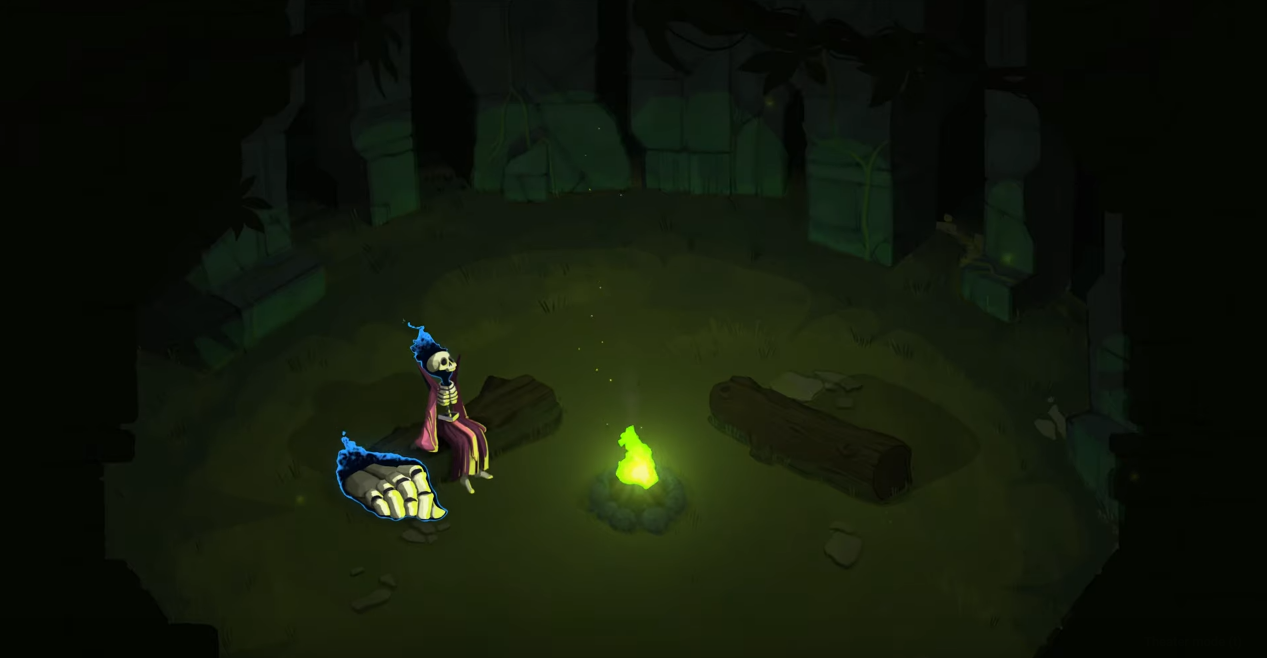
“Who are you talking to?”
You! And I’m telling you we’ve hit an inflection point in the kinds of games people are playing.
Games are more social than ever, but the fields of most genres that support socializing have been exhausted of nutrients. People want to hang out, but they want more options than Minecraft, Fortnite, or [that shooter game, the popular one, you know which one I mean].
It’s also harder now to sit down and play a 100-hour game, but it’s relatively easy to play a 1-hour game 100 times.
If I can reach these conclusions, you can be damn sure the folks making games realized it a while ago, hence that list of games above that are all releasing this year.
And I think that makes Risk of Rain 2 a pretty good case study against which these new games can be measured. I’m excited to see how they do.
Tactical Breach Wizards / Suspicious Developments / August 22, 2024
In a post-Harry Potter world, we need better examples of why wizards are still cool.
Examples like Tactical Breach Wizards, the latest game from Tom Francis and company, which asks “What if instead of SWAT teams, we had WIZTAC teams?”
Well, that would be pretty rad (even more so because, while you employ SWAT tactics, your team are not cops and are frequently opposed to actual cops).
The result is my favorite kind of tactics game—the kind that makes me feel smart by giving me infinite retries to find the best outcome (justified by the presence of an ex-Navy Seer in your squad). Members of your team each have fun abilities that you usually use to throw people out of windows, and they’re all charming characters in their own right. The story revolves around stopping a conspiracy that could launch World War V, but by the end of the game, I was more invested in working through the assorted complexes and trauma of my ragtag band of not-quite heroes.
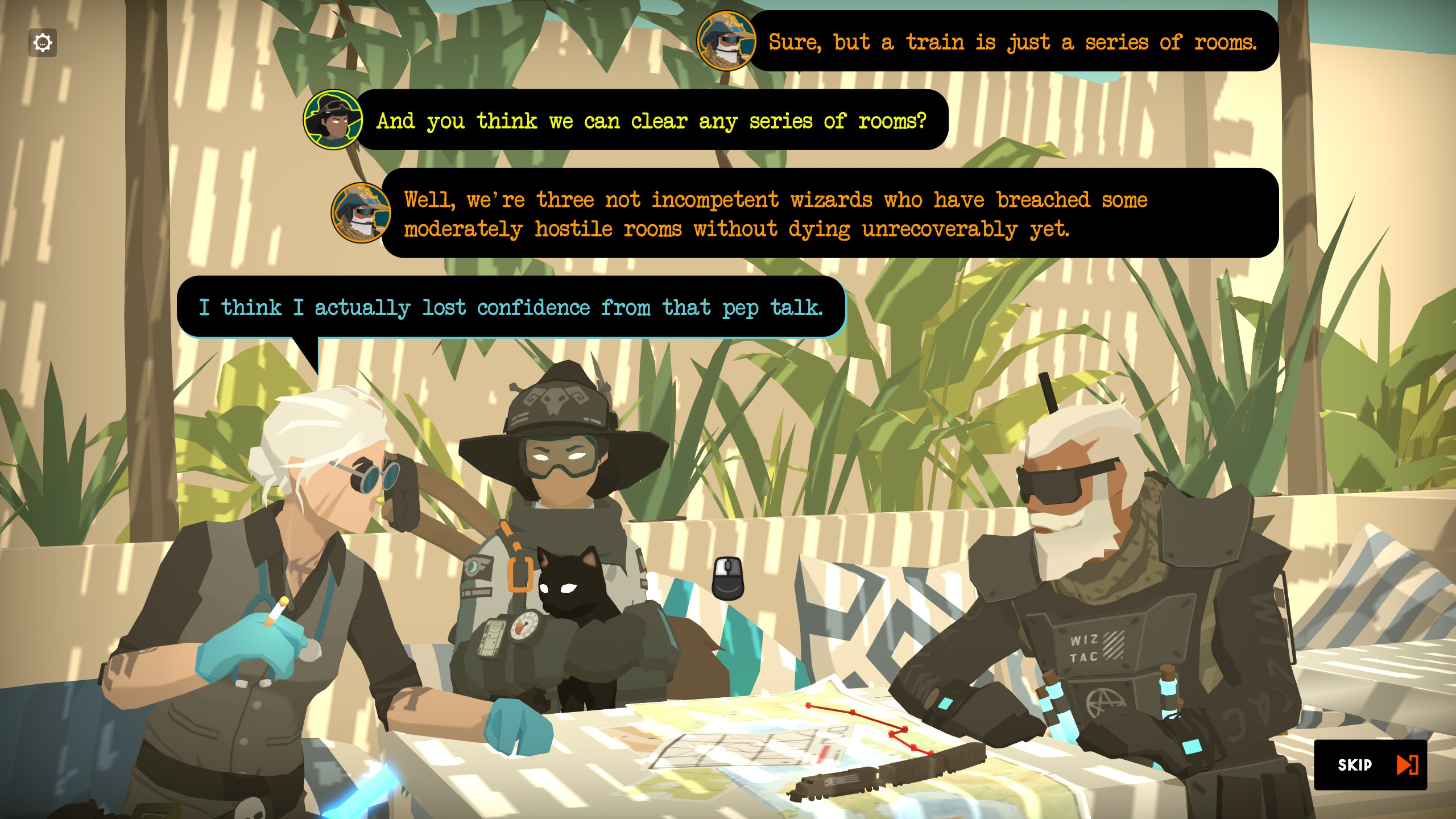
As a bonus, this game has given me inspiration for the kind of druid I would roll if I ever play one in D&D.
Windblown / Motion Twin / October 24, 2024
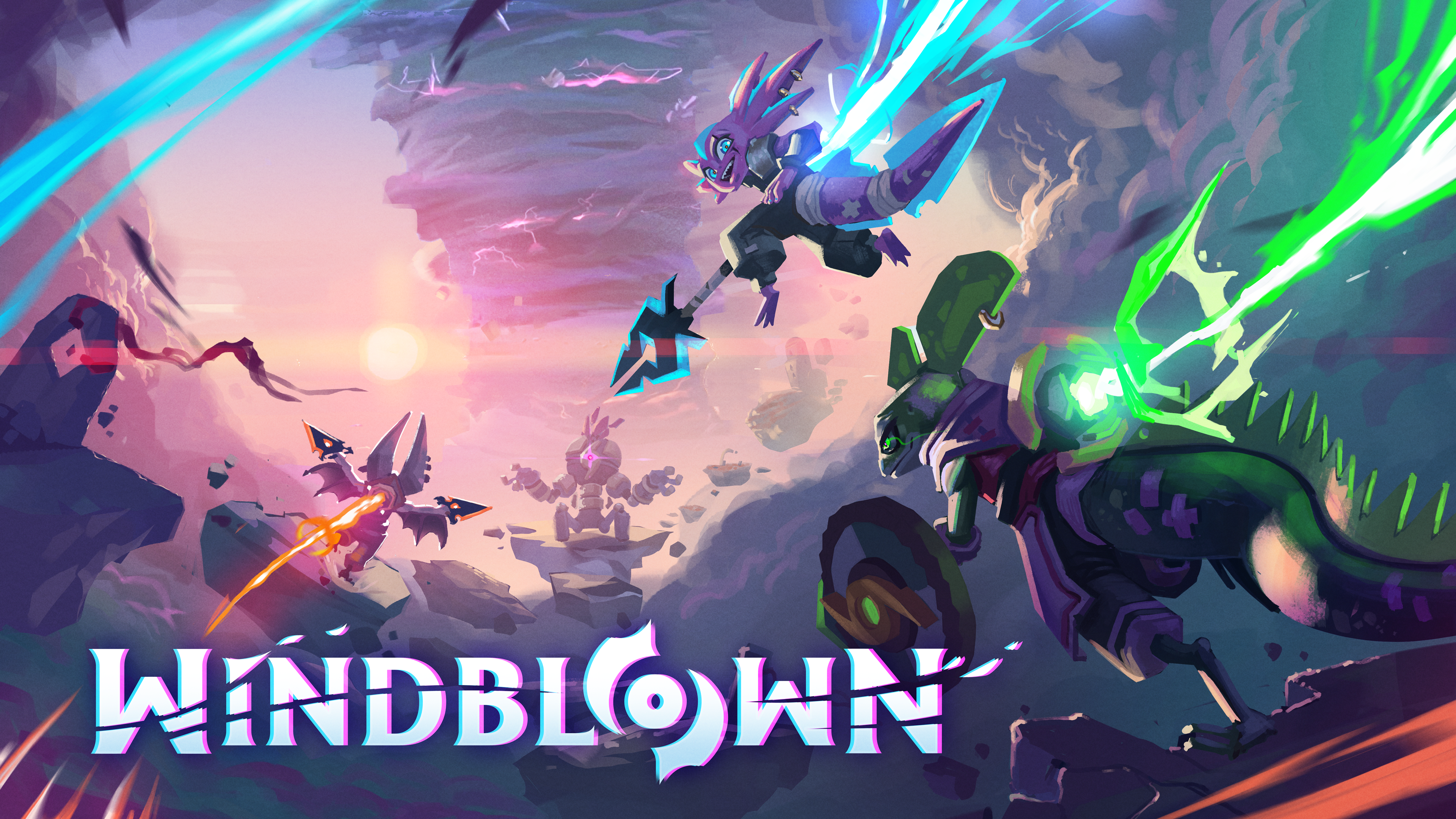
The Year of Games That Are Co-op and/or Action and/or Roguelike technically started with the release of Windblown into early access.
From Motion Twin, the makers of Dead Cells, comes an isometric action roguelike with a heavy focus on dashing circles around monsters and carving them up with outlandish weapons. That sounds a lot like Hades, one of my favorite games, so I was already interested, but Windblown also places a heavy emphasis on multiplayer.
A Hades-like that I could play with my friends? Fully onboard with that.
Now, I enjoy Windblown for the reasons I thought I would, but I’m happy to report it’s very much its own game. The feel of the game is responsive yet weighty, and the decision-making element is enhanced by co-op play—communicating with your friends is critical for building toward a winning run.
Early access means the devs are still working on this one, so I am excited to see how the game continues to grow in the future.
Paper Mario: The Thousand Year Door / INTELLIGENT SYSTEMS / May 23, 2024
Smarter people than I am can dive deep into the ongoing battle for games preservation, but Nintendo’s decision to continually put out full price remakes of their most beloved games while the originals languish on old hardware must be emblematic of the struggle.
And yet, there was a weekend in October where my PC was in the shop, and my Switch was just sitting there covered in a fine layer of dust.
In my defense, Thousand Year Door is one of my all-time favorites, and it had been like 20 years since I last played it. I was curious to see how this remake held up.
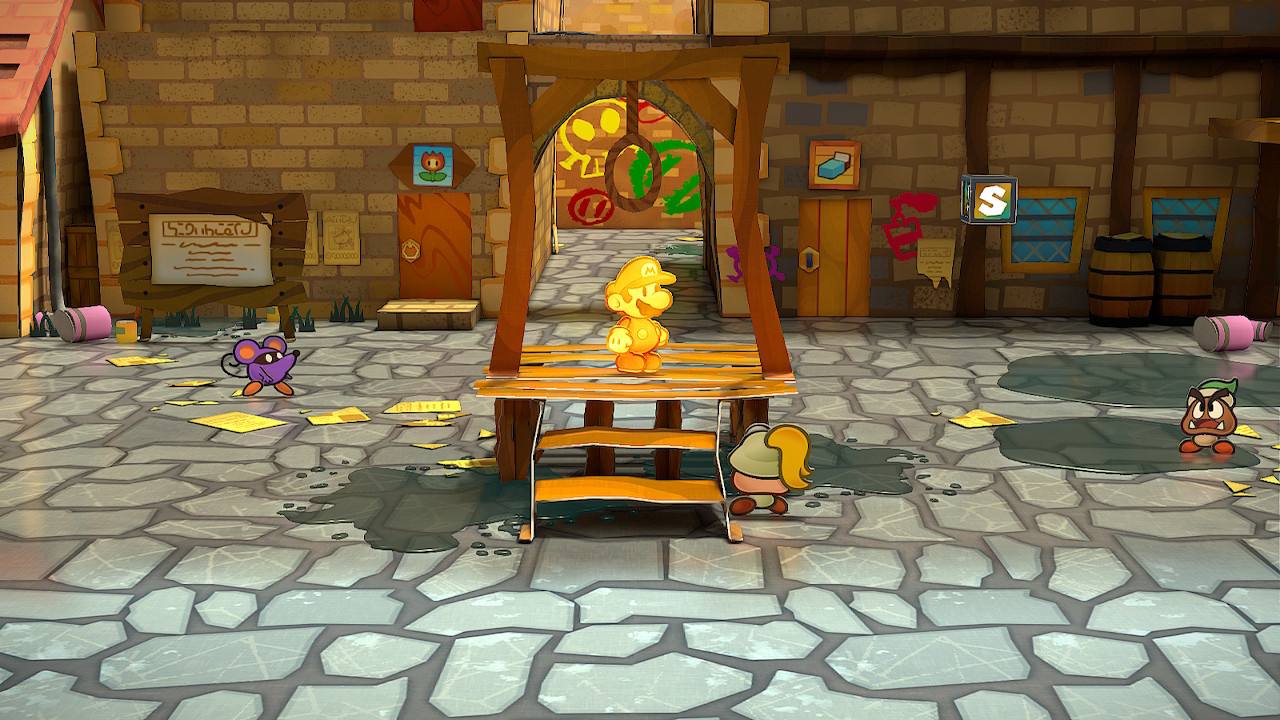
It’s still really good! Heck, it’s better than good in some ways. They’ve tuned up the soundtrack and added chapter-specific battle music. There are some much needed quality of life features to help with navigating menus. I even found a couple of new super bosses that tested my knowledge of the game.
By the end, I had completed 100% of what the game had to offer for the second time. It was as I had remembered it, just with a little more polish. That said, much like how Nintendo didn’t need to fully remake it, I probably didn’t need to fully replay it. I’m just not 100% sure why I feel that way.
After all, I played the remastered version of Metroid Prime last year—a redux that is at least justified by a modernized control scheme—and felt no such replayer’s remorse. I imagine it helps that Metroid Prime is a 15-hour game, whereas my completionist run of Paper Mario took about 50 hours. Few resources are as precious as time.
But I’ve also devoted dozens of hours to replaying Elden Ring. Indeed, I’ve been more than happy to revisit other games through the years, which makes me think it has to do with the approach.
Elden Ring feels different every time I go back to the Lands Between because I’m using different weapons, taking different routes, and adapting to different self-imposed challenges. Metroid Prime also felt different in 2023 compared to 2002—Talon IV is as isolating as ever, but I was able to play Samus more competently than I could when I was 12.
Thousand Year Door felt like the game I remembered, and I played it the way I did the first time, albeit more efficiently.
If a game is so good that I can remember it so clearly this many years later, maybe I don’t need to play it again.
Maybe the memory is enough.
Nine Sols / RedCandleGames / May 29, 2024
Some games want you to become perfect.
Sekiro: Shadows Die Twice is one such game. I’ve written about the way the fights in that game demand that every move you take is a step toward victory. Attack to apply pressure. Defend to expose weaknesses. Slash. Dodge. Thrust. Deflect. Jump. Kick. Execute. Each battle is a dance, and if you don’t keep rhythm, the consequences are dire. Sekiro is a game that is singularly satisfying to fail, learn, and overcome the obstacles placed in your path.
Except it is singular no more. For all the games that have been made to chase Dark Souls, Red Candle Games is the first studio to attempt a Sekiro-like with Nine Sols.
As a 2D action platformer, Nine Sols also owes a lot to Hollow Knight and other modern Metroidvanias, but the combat makes it clear where the greatest inspiration comes from.
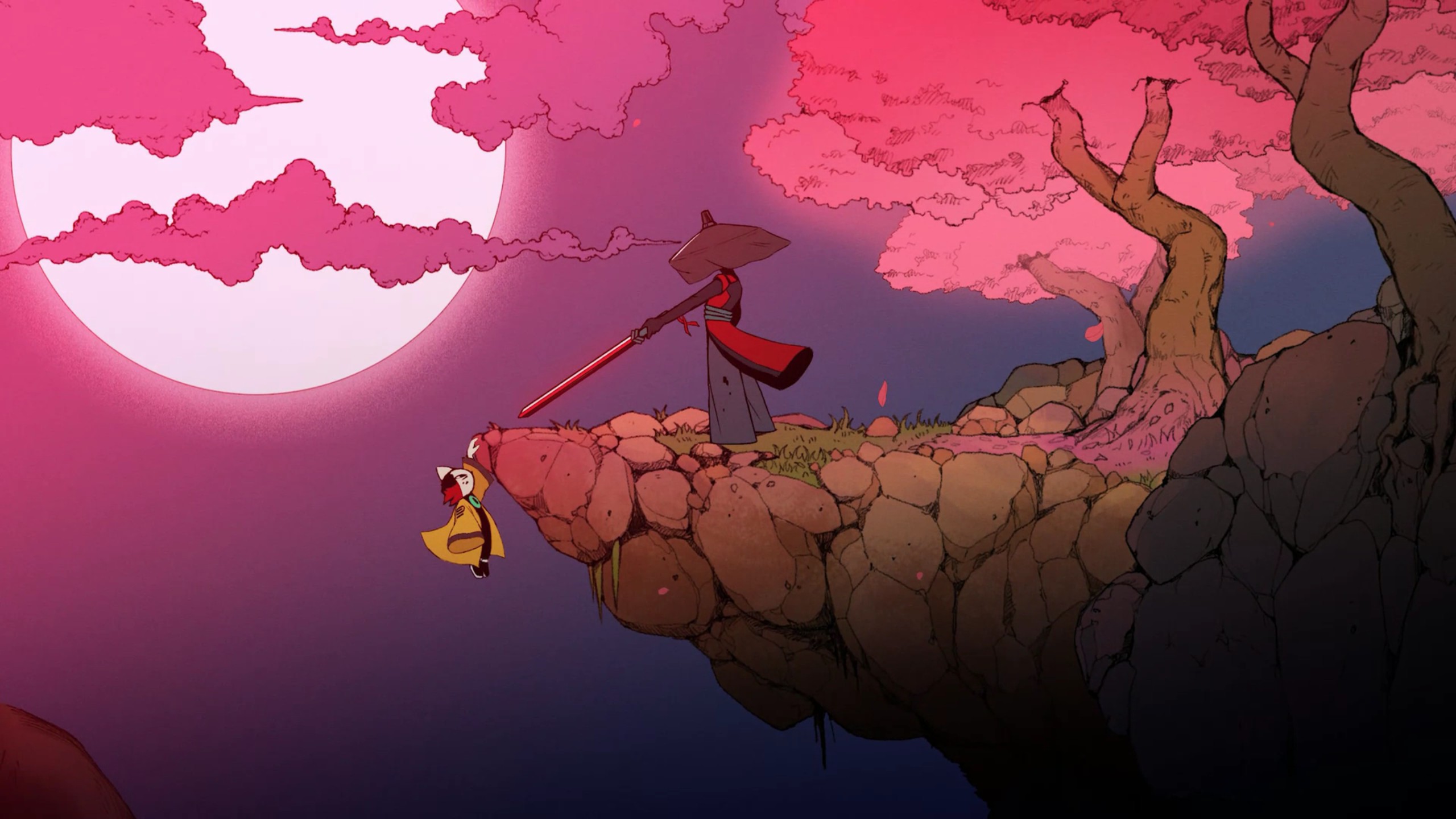
Playing as Yi, a mysterious scholar warrior, you can block and deflect enemy attacks to channel energy. Channel enough and you can slap a talisman onto enemies, which explodes after a short delay. You unlock other tools and abilities over the course of the game, but you need to master deflection if you want to get anywhere.
Total abjuration is the key to victory. Combat can be challenging enough that taking a single hit could spell defeat, but as you might expect, the boss fights are the true test. Some encounters check how much damage you’re able to dish out in a brief window. Others challenge your aerial mobility. But every boss, and especially the titular Sols, are prepared to pummel Yi until you learn to fend off their attacks. Only through perfection can you rise above.
Yi does not carry a blade. He uses his energy—his chi—to parry swords and swat arrows with his bare hands. If Sekiro is a ninja, Yi is a monk, which fits the game and its makers. The setting and themes of the game are a fusion of—or confrontation between—the Taoist pursuit of harmony with all things and the cyberpunk push to transcend one’s limits (at any cost).
Red Candle handles that tension well. Coming from a Taiwanese studio that once fell afoul of Chinese censors, Nine Sols has the feeling of a game with personal significance. While there are no Winnie the Pooh jokes tucked away in this one, the story still has plenty to say about overt militarism, groupthink, blind loyalty, and the pursuit of perfection.
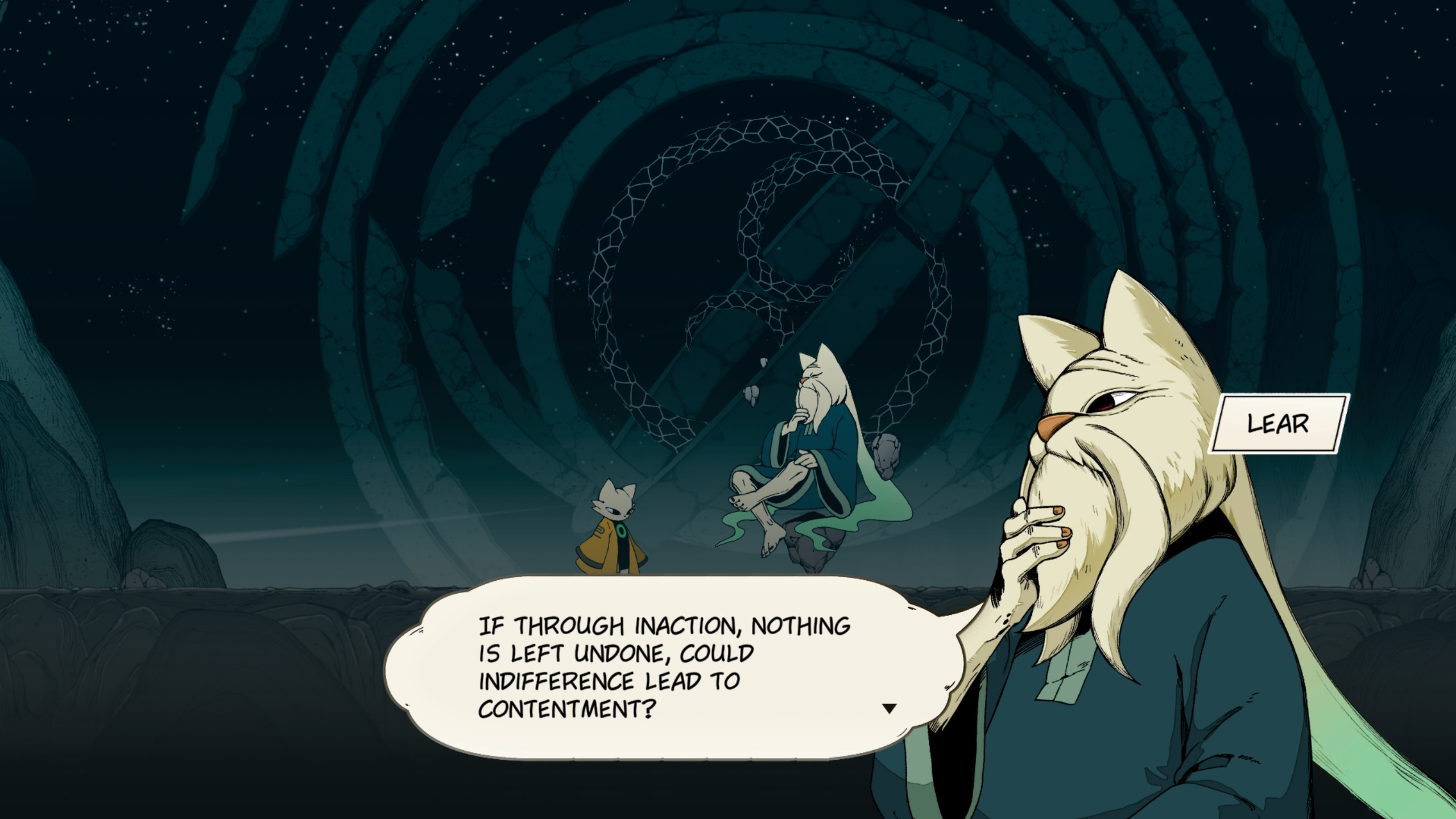
The last boss is a final exam, testing your mastery of Yi’s many skills and techniques. I spent attempt after attempt learning patterns and counters, searching for gaps in their defense that I could exploit. The ninth Sol is relentless and even throws some of Yi’s own moves back at you. When I beat the other bosses, my last attempt was always my cleanest, at times avoiding damage altogether. But for the final one, I used up all of my healing and barely made it out alive.
At the start of the game, it seems like Yi is a character driven by revenge. Betrayed by his master and left for dead, his vendetta against the other Sols starts out like a series of grudge matches, each kill more brutal than the last.
Depending on the choices you make, you come to realize that Yi is most motivated by regret. He strove to be perfect. But perfection is a mirage, its pursuit ruinous to those we would hold close. The only way to truly grow is to accept our faults and move forward with eyes unclouded.
Mouthwashing / Wrong Organ / September 26, 2024

What’s the difference between a curse and a prayer?
They’re both incantations, both a desire for realized intent, both entreaties to some power beyond. The intent itself must be the dividing line, and yet the outcome is subjective.
“I hope this hurts.”
These words set the stage for Mouthwashing. The curtain then rises on a long-distance space freighter, moments before it crashes into an asteroid. What follows feels at times more like a chamber drama than a game, though the player is still given parts to play.
The story, which jumps between a pre- and post-crash timeline, is meant to be recognizable to people working in game development. Johanna Kasurinen, the writer, said that the inspiration for the game came from a past experience. She was working on a game where the writing was on the wall long before the project was canceled. The only thing keeping the team going was the toxic mindset of “We can still fix this if we just try harder.”
But Mouthwashing presents a story that doesn’t feel unique to the games industry. Playing as members of the crew, it’s easy to recognize the fragile détente between a group of coworkers that just don’t like each other very much. Going through the motions on a project you don’t believe in, putting up with your narcissist boss, dealing with the person enabling your boss—it’s all familiar even before the game piles on a heaping helping of corporate greed and callousness.
Pain is a kind of recognition. The devs of Mouthwashing want to hurt the player to provoke that recognition, one that will help them see that they’re either in a bad situation or that they’re part of the problem.
What’s the difference between a curse and a prayer?
Sometimes, nothing at all.
The rest
As promised, here’s the remainder of what I played last year.
No Man’s Sky / Hello Games / August 9, 2016
It’s fun, but I decided to wait for their next release, Light No Fire, a game where I get to be a rabbit person.
MARVEL SNAP / Second Dinner / October 18, 2022
Still fun to play, but increasingly dragged down by exactly the kinds of things you would expect to drag down a free-to-play mobile game.
Palworld / Pocketpair / January 19, 2023
Probably the most surprising game on this list.
Dark Souls: Remastered / FromSoftware / May 23, 2018
Sometimes, you just have to go back.
Baldur’s Gate III / Larian Studios / August 3, 2023
Turns out beating an amazing game and then immediately starting three separate new playthroughs is a great way to burn out on a good thing.
Lethal Company / Zeekerss / October 23, 2023
Tried playing the creepy worker exploitation game with a seasoned group that had long since ceased to be creeped out by anything, which definitely detracted from the experience.
Wingspan / Monster Couch / September 17, 2020
You think eggs are expensive now? You have no idea.
Slay the Spire / Mega Crit Games / November 14, 2017
I want the sequel to be out right now.
Hades II (Early Access) / Supergiant Games / May 5, 2024
Supergiant’s first sequel, and there’s nothing to worry about here.
Animal Well / Billy Basso / May 9, 2024
This game got tons of hype, and I feel like it completely went over my head.
Metaphor: ReFantazio (Prologue Demo) / ATLUS / October 10, 2024
I’ve never played a Persona game. This is kind of like those, but you don’t have to pretend high school was fun.
Monster Hunter: Wilds (Beta) / CAPCOM / February 28, 2025
I’ve never played a Monster Hunter game, and I’m hoping this scratches a heretofore unnoticed itch.
Cairn (Demo) / The Game Bakers / December 5, 2024
Climbing game with a lot of promise, so much so I was worried I would come away from the demo with frayed cuticles.
Monument Valley 3 / Ustwo / December 10, 2024
I kinda wish these games were 25% less artsy and had 25% more complexity. Also, it’s weird that Netflix owns Ustwo now.
Closing thoughts
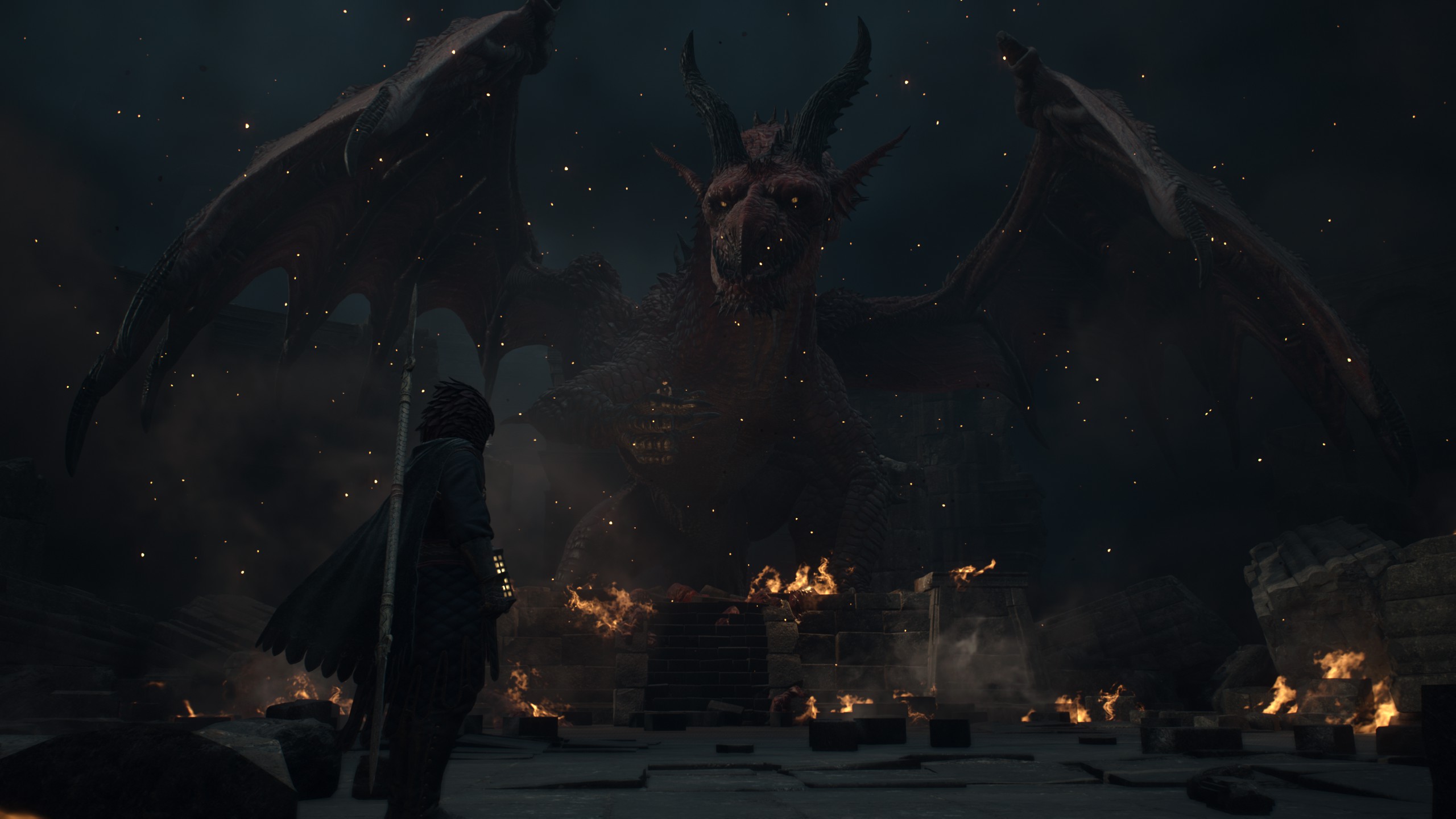
From the people who brought you “Survive to ‘25”, get used to hearing “Exist by ‘26.”
Everything is compromised, and 2024 is the year it became impossible to ignore that.
Consider:
- More layoffs, all the time. Following record attrition in 2023, more than 14,500 game developers lost their jobs last year. A survey by the Game Developers Conference estimates that 41% of all respondents were affected by layoffs. People who make games continue paying the price for bad decisions made by people paying to have games made. Meanwhile, the enthusiast press vanishes apace, and not just because of turnover.
- Everything is (still) Gamergate. Read about the controversy surrounding Sweet Baby Inc. at your own peril, but know that I disagree with those who labeled it Gamergate 2.0—Gamergate never went away. A subset of maladaptive, terminally online people continues to wield social media as a cudgel to harass game developers, games media, and anyone who doesn’t buy into their current pet hate. These groups are more easily riled than ever thanks to rage-baiting influencers who are in no uncertain terms pedaling conspiracies to turn a profit. The venn diagram of anti-woke brigades propping up the latest male gaze simulator, media-illiterate goons using Helldivers II as cosplay, and even the winning presidential campaign is a circle. These people all speak the same language, they’re all working toward the same ends, and they all have to be firewalled out for the rest of us to know any peace.
- Service games serve whom, exactly? The corporate push for games that make infinite money might soon reach its reckoning. This urge begets failure and flameouts like Suicide Squad and Concord, and Sony has now cancelled as many live service games as it once promised to publish. With Destiny 2, we see the fate awaiting any game that manages to endure—a player base that dwindles more every time the game fails to meaningfully reinvent itself. A game like Helldivers 2 that has sustainable development goals and reasonable monetization is an industry darling when it takes the world by storm but will later be written off at the first signs of a sagging player count. Meanwhile, free-to-play gacha-style games sustained by manipulative business models continue to elbow their way into polite society.
- The mire of non-discovery. At the same time big publishers and platform holders throttle access to older games, it becomes more and more difficult to even hear about new games. Almost 19,000 games were released on Steam in 2024, and the digital stores for consoles are similarly choked with releases. So, so many of these games are shovelware or worse, but with curation at an all time low and algorithms taking on a larger role than ever, games that might be worth playing get buried or fall through the cracks.
- Generative AI, in general. At this point, if you aren’t fully up to speed on all the deleterious effects of generative AI, I’m gonna need you to get a fucking clue. The legions of grifters peddling this shit are going to continue cramming it down our throats until the bubble bursts, and the folks in the boardrooms at Square Enix and Ubisoft and Electronic Arts and wherever you work are all too happy to pay hand over fist for spoonfuls of slop. The only way to make these people see sense is by loudly voicing displeasure wherever AI rears its impossibly ugly head.
That’s just a sampler. The harder you look, the bleaker the situation appears.
With parts of the games industry on life support, with malign forces ruining everything they touch, with the world at large falling to fascism, why persist here? Why make time for games?
Well, I hold that two things remain true.
First: You cannot, under any circumstance, let the bastards bring you down.
And second: Because play is essential.
I say this not just to suggest that play is important but to insist that play is literally essential, as in pertaining to the essence of a thing.
And that thing is you.
(I’m gonna air this one out a bit, but I hope you still catch my meaning in the end.)
We are full of an essence that makes us who we are. Call it whatever you want.
Soul…
Spirit…
Light…
Imagination…
I’m partial to that last one, but for the purposes of this metaphysical detour, I’m going to stick with essence.
Our essence is not immutable—it interacts with certain essential verbs, which appear in the sentences that tell our stories. These verbs take different forms but each interacts with our essence in specific ways.
First, there’s Work. Work expends essence. Of the essential verbs, it is the least vital—or it ought to be. Work underpins everything else we do, providing overhead for us to go about our lives when we’re not on the clock. Ideally, we could be in the mode of working as little as possible, but the world at large often has other ideas.
(You may disagree and take another view of your work. Maybe you feel like work gives you a sense of purpose or community or structure. I might ask you to interrogate the truth of that feeling, but I mean for all of this to be subjective, so you do you.)
Second, there’s Make. Make cultivates essence. When we make something, we are enriching or refining the raw material inside us. What we make is immaterial; so too is the method of the making and the quality of the result. We can write, paint, build, cook, perform, or otherwise create something using any means available to us. Just by making that something, by expressing ourselves, we become more.
Third, there’s Love. Love shares essence. I don’t think I need to explain how important it is to spend time with people dear to you. Show them who you are, as much or as little as you feel that you can. Listen. Be there when they need you.
And finally, there’s Play. Play replenishes essence. We play to nurture our imagination, to push at boundaries of thought and grow our capacity for creativity. Play makes this system sustainable, restoring what we put into Work, what we use to Make, and what we share with those we Love.
You might be inclined to substitute another verb for Play, something like Watch or Read or Listen. I can see how each of those might be replenishing in their own way—you’re experiencing something that another person has made, using their essence to feed your own—but while I can’t deny my bias, I think those verbs are missing something that we only get when we play.
Play is distinct from the others because it centers the experience on us, the Player. To play is to embody an idea put forth by a game (or another player), to feel that idea with your whole body. I continue to subscribe to the notion that games are physical objects we can touch. Play is the process of touching. It is felt in the way lightning leaves your fingertips, or the way you take up a hand of cards dealt from a carefully (or haphazardly) constructed deck, or the way wind ruffles your garb as you leap into the air.
Again, this is all subjective. My focus is on games, but games are just the most expedient way to play. You might find your own way, something you feel is equally restorative.
Yet no matter what form it takes, we must play. That is what I mean when I say that play is essential.

To put all of that another way, I think it’s important, even in dark times, to find time for fun. Or at least find time that is just for you. Use that time to recover what the rest of the day takes from you.
But if you can, you should play. The moment you stop playing is the moment you surrender your imagination to this world that just wants to grind you to dust.
Now, having put forth this thesis, I can examine its application, specifically with regard to myself.
I recognize that my own essence is unenriched.
For as much as I Play, I do not Make enough—or I don’t Make often enough.
A lot of this has to do with feel. My preferred method of Make is writing, and writing feels like Work to me. It is all too reminiscent of the daily grind. Even the most critical part of writing—the part where you are sitting in your chair, looking for all the world like you’re doing nothing when you are actually cursing the cursor for not linking directly to your ego—even that I would categorize as work.
And it is. It is work.
Here, we can start to poke holes in my little theory (if you started before this then my feelings are only a little hurt), but Work and Make probably have some overlap. Rather, there is likely a distinction between “Work for the Man” and “Work for Me”, and I’m not proficient at perceiving that gap. That’s something I could work on.
Instead, I want to push in a different direction. I want to see if I can get Make to feel more like Play.
In the past, there have been innumerable times when I was playing a game (or watching a show, or reading a book, or listening to music), and I would think “This makes me want to write something.”
And then I didn’t write anything.
Maybe I did eventually. This whole series of blog posts is me eventually writing about the games I play.
But if I acted on that inspiration sooner, imagine how many more blog posts I would have written. Imagine what else I might have written.
Maybe writing would feel different.
Maybe it could feel better.
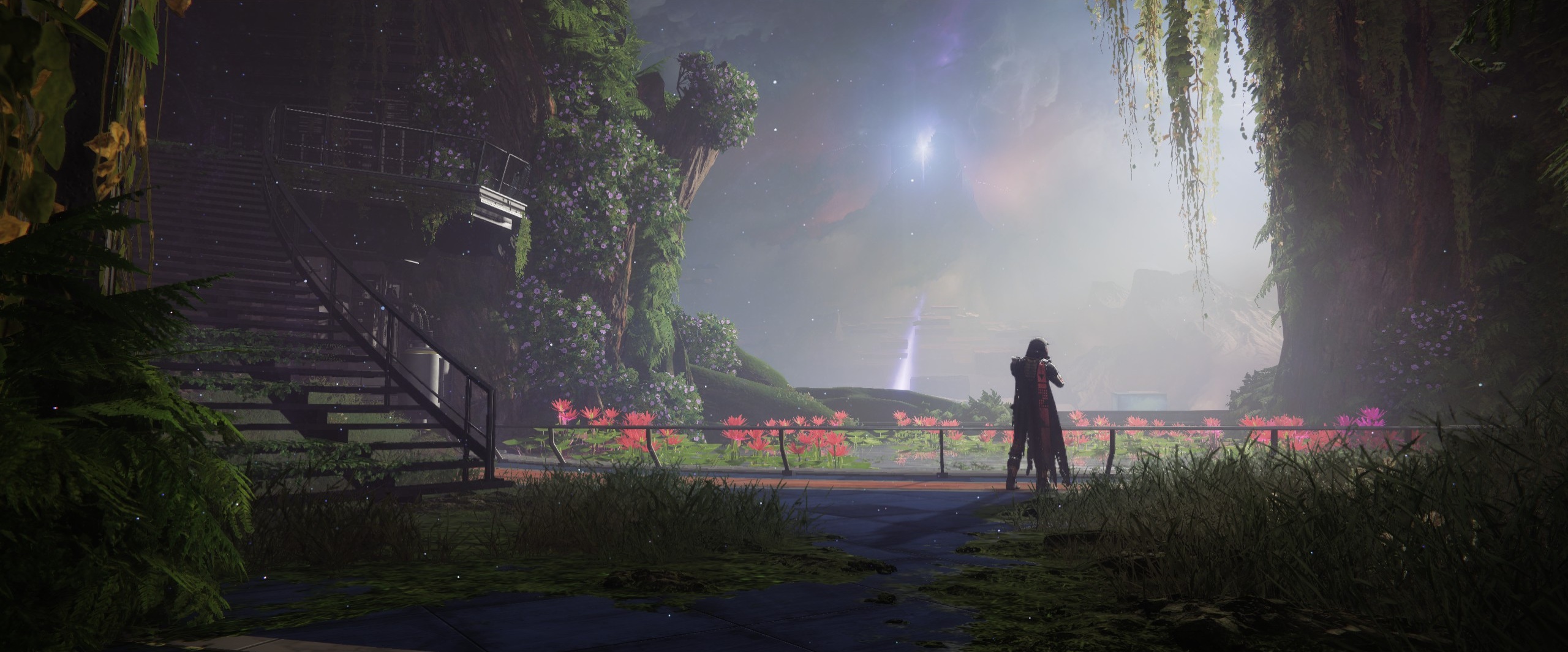
I’ve been trying to figure out a way to put a bow on all of this instead of a tourniquet. In searching for the right conclusion, I looked back at previous editions of this post to see how those wrapped up.
Would you believe me if I told you each post leading up to this one featured some form of resolution to commit more thoughts to paper?
I don’t know how to tell you that this time will be different in a manner that would see you trust me. I just know this time feels different. I feel different.
Is that enough? On some level it has to be enough. If I can’t do this for myself, how can I do anything for other people? And we are hurtling headlong into a period where we will need to do things for each other.
I sure as hell don’t know what else to do. The pace of atrocity outstrips our capacity to understand what is happening (by design), and I am left with no idea what to do about any of it.
All I know is that we have to help each other. If we have each other, we will go on.
Maybe with your help, I could follow through. It would be great to hear from you.
Let me know what you’re doing to get by. Tell me how you choose to Play. Ask me what I’m going to write about next.
Until then, I’ll keep trying.

 subjunctivitis
I look forward to these every year. Some scattered thoughts since you asked to hear from people.
-I have wanted a “chess phase” real bad. I think I am too spastic in terms of playing things to truly get chess but god is it enticing.
-Balatro should be on the “Every Game I Played in 2025” post.
-We’ve spoken about this before, but I am so jealous of your continued DnD success.
-I think of all the sections the one on FFIX is my favorite part. I am in the minority where I think FFIX is the worst PS1 FF; I remember when I was young and my friends were all into FF and no one talked about this game. I did not know it existed beyond the fact that it had to since they wouldn’t have gone from VIII to X. Its recent rise to “the best one, actually” status has been surprising to me to say the least. But I can see why that happened to some degree. For all the faults I have with the game (and admittedly, I have never beaten it), it comes from that late stage era of Square where they had fully mastered the PS1 and every game they made looked and sounded fucking perfect even if they had their share of flaws. I genuinely don’t think games have ever needed to look better than Vagrant Story. All this to say in a roundabout way I enjoy reading about games I don’t like when the person writing it does like them. I’ve been trying to be more open to games I used to slander (for good reason or no reason at all, lord knows as forum veterans we all have our share of games that we decided to go against for dumb reasons) and I think for RPGs in particular the “read about them” method helps in this regard.
To the point about FF in danger, I think you are spot on that SE should consider the series more niche now. I am not and never ha been a huge FF guy (I have played XII though! I think it might actually be the best 3D one, or could have been if Matsuno was involved the whole way through) but the company is still making interesting RPGs under different names and with different budgets and expectations (I’m told Octopath Traveller II is a hoot, and before this era Bravely Default was fantastic.) Some smaller scale, weirder FFs could be just as great if they are willing to take a backseat a bit and let Dragon Quest keep the money flowing (which seems to be the one RPG eternal, at least in Japan.)
-Couldn’t agree more about Elden Ring. I think the game is a miracle and a gift, but the knobs are well past 11 at this point. I would love to see a more diversified spread of FromSoft games like they used to do before Miyzaki. That might not be feasible in the current miserable market conditions, but FS seems to somehow manage to do their own thing and make it work so maybe they could do this again. I think back to like 2002-2003 when they were making Lost Kingdoms and Otogi and all sorts of weird different games.
Alternatively, Armored Core VI expansion is more than acceptable. Abide with Rubicon.
-Deeply fascinated by Nine Sols. I am currently in deep with two other Metroidvanias (Blade Chimera and Prince of Persia: The Lost Crown) so it hasn’t happened yet, but I want to play this one real bad. Maybe after Detention and Devotion.
-Been trying to be more open to the games I play these days. For the most part I am not buying a lot of new games (unless they are fighting games) so its more like going back and playing stuff I either wrote off or wasn’t crazy about before. The current project is playing a Trails game (two down, eight+ to go!) and mixing it up with something shorter and more action-y to maintain a nice balance. I played through all the Devil May Cry games recently using this method. Been more open to genres I previously with have scoffed at too; I finished both The House in Fata Morgana and Tokimeki Memorial (a few times in the latter’s case) last year and I think both games are genuine masterworks. A few years ago I never would have even considered playing them. I think for me I’m tending to look for more niche rather than new. Stuff like finding out the PC Engine/TurboGrafx produces such wonderful aesthetics or that the Saturn is (slightly) easier to emulate now is what is keeping me going game wise when I’m down to maybe one or two big AAA game purchases a year.
-In closing, I would love to see you write more. As I mentioned I’m always thrilled to get an update on here, game related or not.
LikeLiked by 1 person
-My chess phase primarily consisted of setting up a chess board on the corner of my desk (back when I worked in an office). It was an open challenge to anyone in the office and games would play out over the course of several days as opponents were able to swing by my desk and make their moves. I’ve never gotten so deep into the game that I was learning gambits or openings.
-My current card-based obsession is the Zachtronics Solitaire collection. I hear Balatro is getting another update this year, so maybe when that happens it will be a good time to get into it. I’ve mostly avoided it because I know what it will do to me.
-I think I had the most fun writing the FF section, so I’m glad that one is a hit. The late PS1 aesthetic is very good, I will agree. For my part, I’ve been playing Metaphor recently, and it’s made me realize that games probably could have stopped looking better after Tales of Symphonia. So yeah, we probably peaked in the early aughts.
I actually heard similar praise about Octopath II, and I grabbed it on sale a while back. It’s been on my list, and since I seem to have gotten back into RPGs, maybe I’ll give it a shot sooner than later.
-I would gladly take a 4-Answer style expansion to ACVI. But obviously, I’ll play just about anything From wants to put out. I think they’re in a good place with lots of Miyazaki proteges stepping up to do their own thing.
-I heard about Blade Chimera, that it’s more combat-focused than exploration. And people said that Lost Crown was the last Metroidvania last year, so I want to give that a shot. I think Nine Sols will be a good companion to those if you still have the appetite afterward.
-Tokimeki Memorial! Respect. I watched the Action Button video on that. Seems legendary. I’m sure I could stand to expand my horizons, though I’m hoping I can just find some stuff in my backlog to supplement any of the newer things I want to try.
-Thanks for reading!
LikeLike