
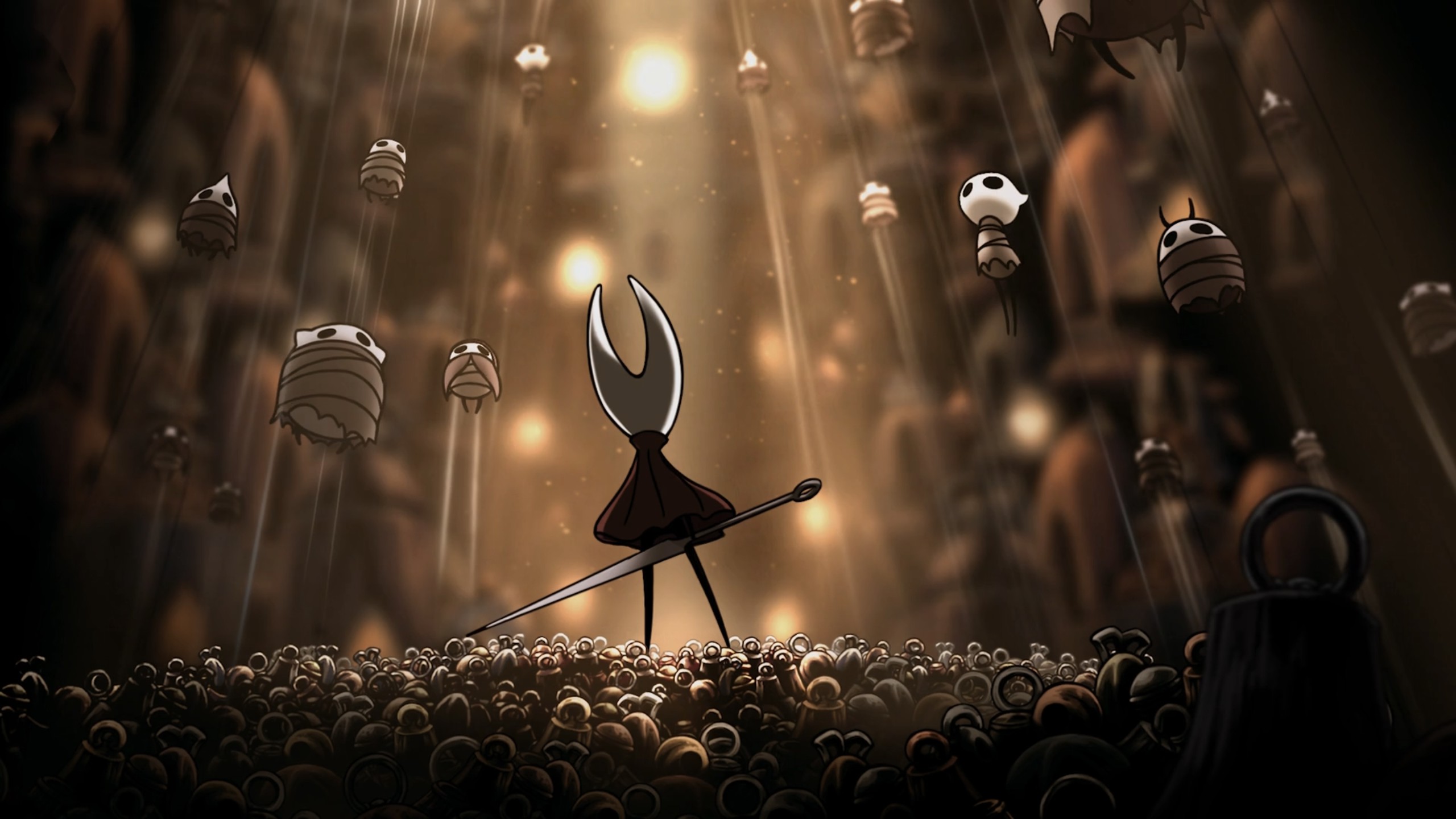
Early in Hollow Knight: Silksong, someone asks for your help building a bridge.
The bug asking for aid is called Flick, the resident fixer of Bone Bottom, a town in the depths of Pharloom. A capable craftsman, he doesn’t require practical help from you, instead asking for raw materials—shell shards, mined from the environment or gathered from fallen bugs along your path.
In the kingdom of Pharloom, there’s a custom of posting requests like Flick’s to wishwalls. The bugs of this land, many of whom are on a pilgrimage to the sacred Citadel atop the realm, leave their wishes on the board and hold onto faith that someone else will come along and make them come true.
Flick’s wish is called “A Lifesaving Bridge.” He means to build this bridge across a pit near the edge of town, one that many a pilgrim has tumbled into. You too have run afoul of this fissure, plummeting into it at the game’s outset.
(I’ll keep the details vague, but there are some spoilers for the game in this post.)
In Silksong, you play as Hornet; Hornet is not a pilgrim. She is a warrior. A hunter. A guardian. In the game’s prelude, she has been captured by envoys of the Citadel and brought to Pharloom as a prisoner. Once freed, she wants only to reach the pinnacle and confront whatever entity ordered her detainment.
Hornet has little reason to help or even trust the bugs of Pharloom, and she approaches early interactions with a cautious but mercenary mindset. If she can gain information or material aid from someone else, she’s willing to pay or do them favors. The wishwall in Bone Bottom has a number of requests pinned to it, many offering a bounty if they’re fulfilled.
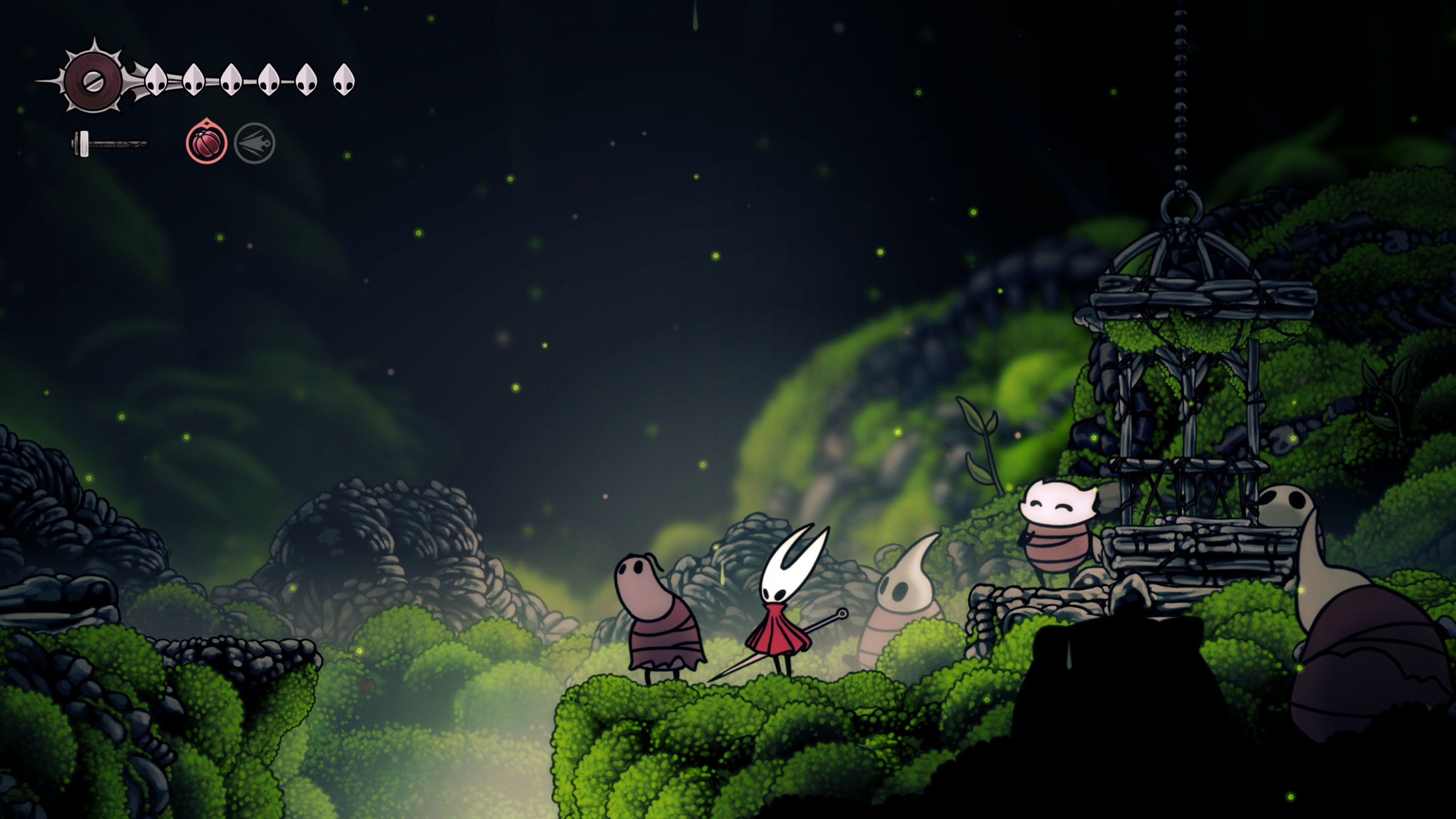
But “A Lifesaving Bridge” is different. It asks you to donate the shell shards, promising nothing in return.
At this point in the game, you probably have more of these shards than you can carry, and although they serve a purpose in gameplay, Hornet doesn’t currently have need of them. It seems like a fairly simple calculus: Since you have more than you need, won’t you share this resource to save lives?
Flick gets to work once you make the donation, and when you return to Bone Bottom later, a rickety bridge will span the treacherous gap.
Here’s the rub: You’ve just inconvenienced yourself as a player. There’s a secret area down below that you’ll want to return to several times during your journey, and the most direct path to get there is jumping down this hole.
You can easily correct your “mistake.” The bridge is fragile and will crumble after just a few whacks with Hornet’s weapon. But you financed this bridge, in a way, and Flick worked hard to build it, and isn’t it saving lives by standing there? You only have to go 10 seconds out of your way to circumvent the bridge and reach that secret area.
No one will chastise you for destroying the bridge; no one will thank you for not destroying it.
It’s a decision you have to live with, either way.
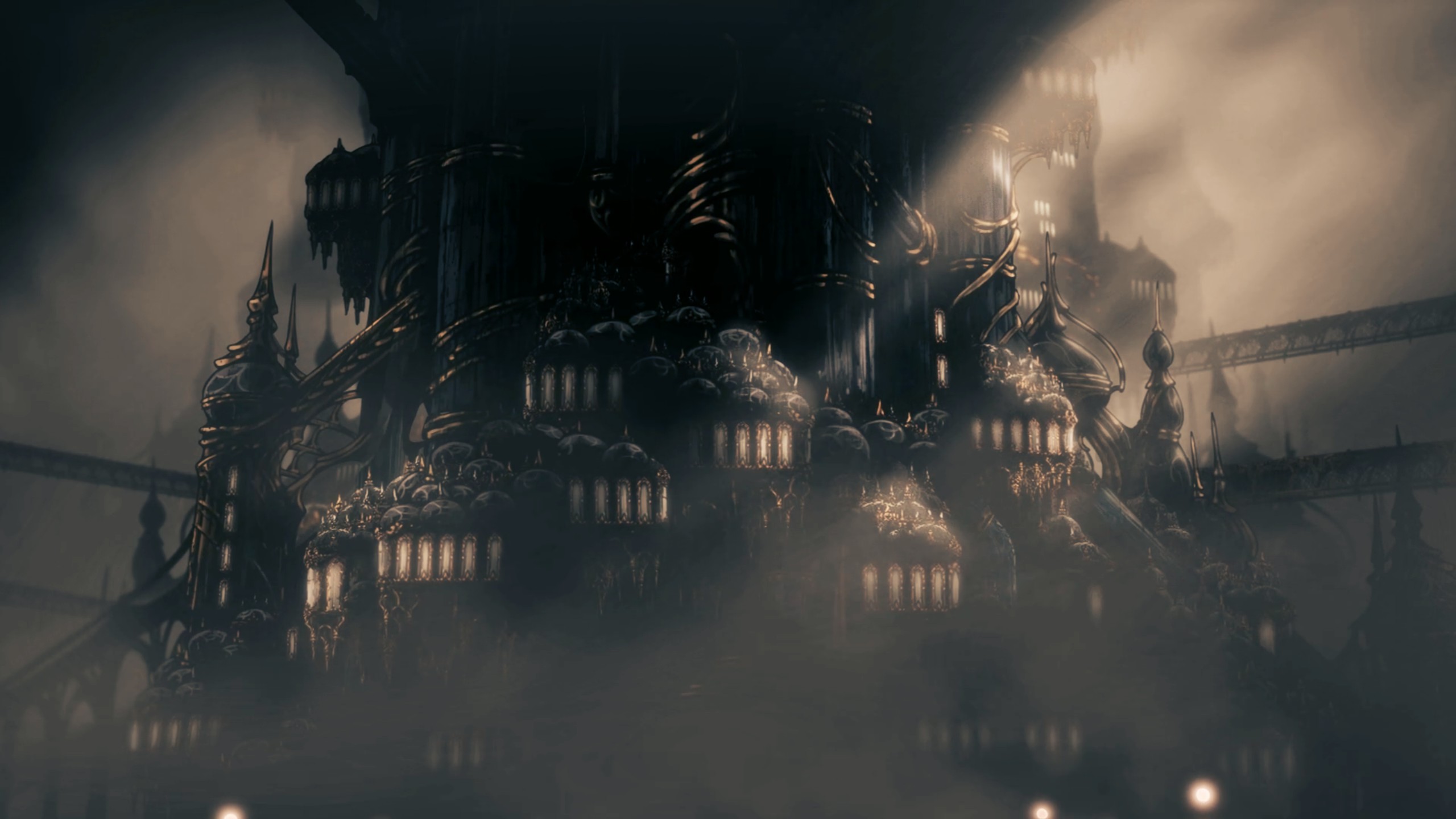
The Citadel does nothing but take from those who would attempt to reach it. The currency recognized by this theocracy is rosary beads, each one representing a prayer. The path spiraling up to the seat of Pharloom’s authority is gated at every junction by agents and mechanisms of the state demanding payment.
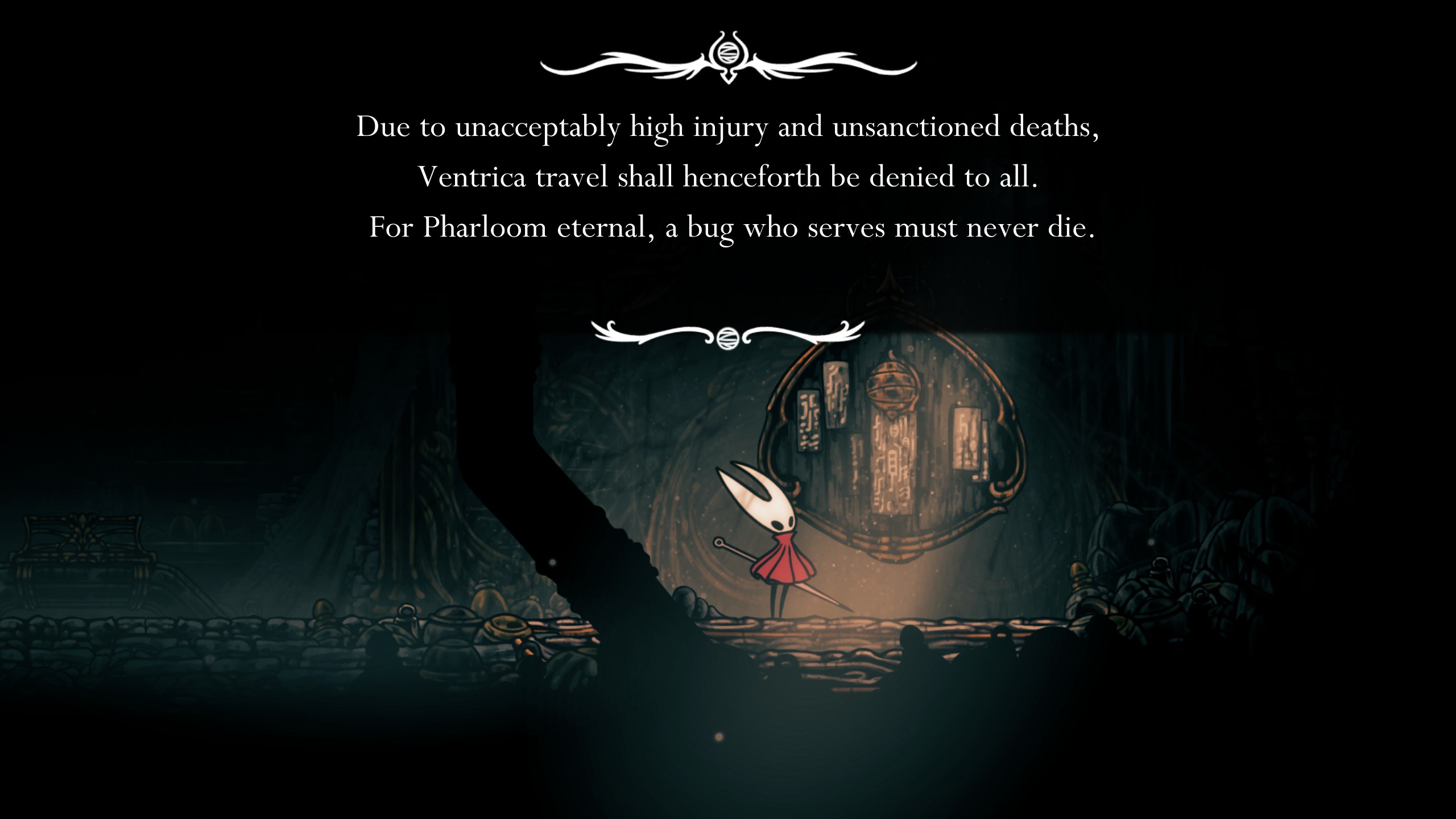
Insert rosaries into one device and a small shrine with bells and a bench to rest on appears. Another toll booth accepts beads and opens access to a bellway, Pharloom’s (long defunct) rapid transit system. There’s a shelter in the Far Fields called Pilgrim’s Rest that charges 30 rosaries just to get in the door, each and every time you enter (unless you sabotage the lock). Still other machines will take your rosaries and string them together so they’re harder to lose, though the machines tax you by skimming some beads off the top.
And how does the average pilgrim contend with this trail of indulgences? Most of them don’t. You will find many along the path who have lost their minds, attacking you on sight. Such bugs are frequently described as “haunted”, gripped not by faith but by a siren song meant to keep them ensnared in a larger web of exploitation.
Other bugs toil away as cogs in the Citadel’s crumbling apparatus, pressed into service mining in the Deep Docks, milling in Greymoor, or stoking in the Underworks. Those who cannot reach the Holy See can still be of use to the Faith, working themselves to death and beyond to expunge the sins of their failure. Any who will not work are instead incarcerated, left to rot in one of Pharloom’s many jails, though the only real difference is that those prisons have bars.
In spite of the kingdom’s grim state, Hornet’s journey is not a lonely one. You will encounter many who have not yet lost themselves, clinging to each other in small enclaves throughout the land. These places, like Bone Bottom, have a wishwall. And posted next to the favors, the bounties, the errand lists, there are requests for donations. This time they ask for rosaries, to the tune of several hundred apiece on more than one occasion.
One such request appeals to the devout:
“Harken, ye holy! Our home has been cleansed of evil, but now we are tasked with restoring its former glory! Share your rosaries with us, that the work may begin.”
Others dispense with the pretense:
“If this place must provide shelter for every ragged bug who wanders in, we’ll need supplies and currency. So if you’re reading this, empty your pockets!”
Unlike that first request for shell shards, rosaries have a clear and immediate value. They aren’t hard to come by, but neither is the next expense. Perhaps you had been saving to buy a rare resource from the local merchant, or maybe you just spent what you had on a map of a treacherous region, and isn’t it prudent to have some beads on hand in case another toll booth, literal or not, blocks your way?
Sooner or later, you may again notice that you have enough to fulfill the wish. Whether it’s the last wish you get around to or your own shopping list seems less pressing, you can deposit the rosaries into the box. The wish is marked as granted, and then… nothing else happens.
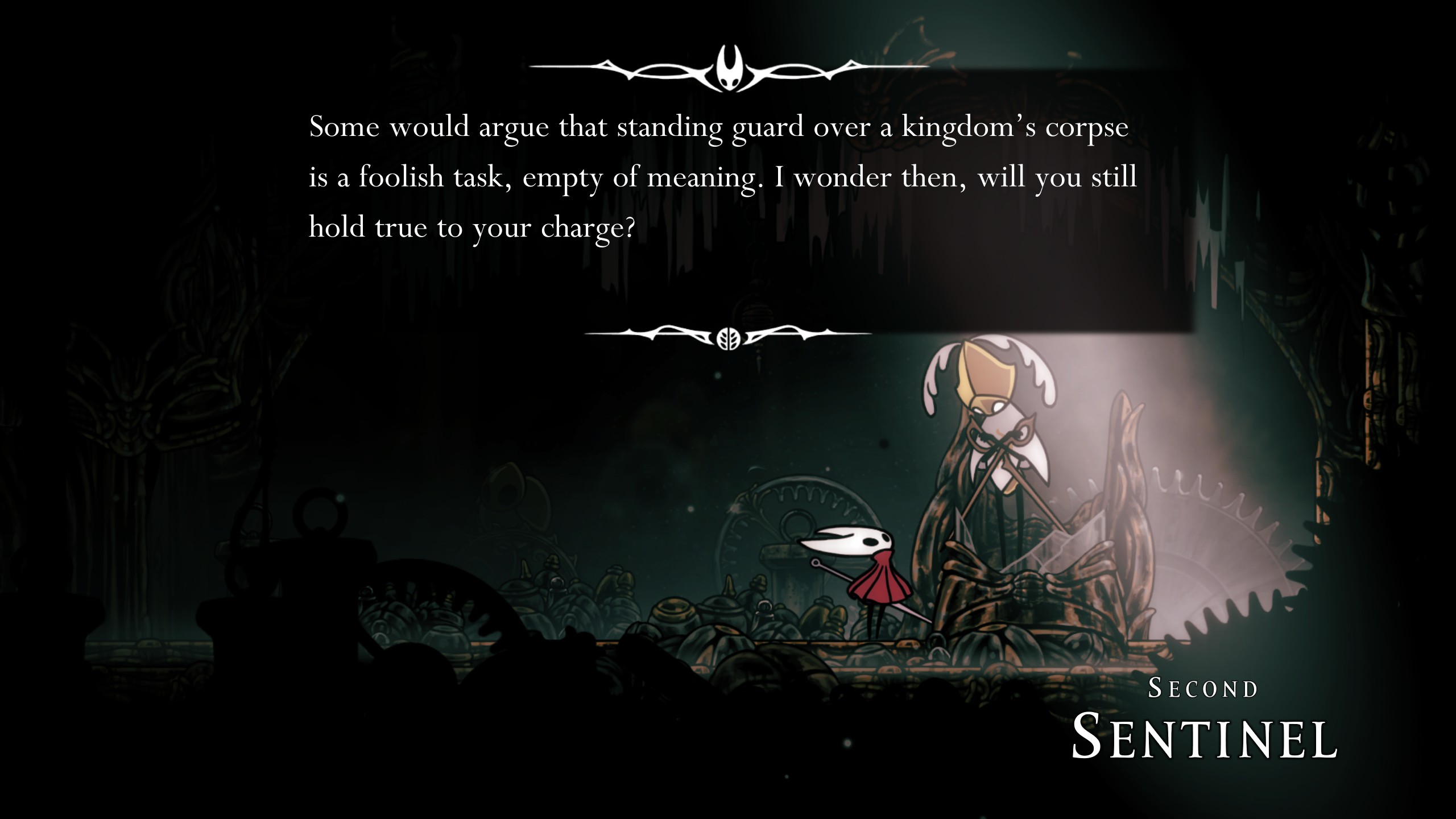
There’s a version of Silksong that concludes after only two acts. Hornet does what she set out to do—confront her captor and strike them down. It is an outcome that sees Hornet give into an individualist urge to rise to the top. She creates a power vacuum and then fills it.
But that’s not how the story has to end.
Returning to enclaves at various points in Hornet’s journey, you will find that more bugs have come forward with wishes. There are even more wishes to hear out on the road, offered by secluded bugs who yet survive in the forgotten places of this world. Traversing Pharloom’s furthest reaches reveals more horror and injustice, but it also grants opportunities to meet fascinating strangers and weave connections.
Often, Hornet is asked to help gather supplies for an enclave, and aside from whatever payment is rendered, you’re also rewarded with a change in the scenery—a clothesline bowed by freshly cleaned robes to keep people warm or a rack of sharpened pins that bugs can use to defend themselves from the haunted. Other wishes restore some fixture of the community—rescue the town courier or the wandering merchant and they will set up shop and ply their wares.
But when you donate hard-won rosaries, there is no such visual stimulus, no clear mechanical benefit. You give and then receive no indication of how your money is spent or who might have benefited from it.
Such is the experience of charitable giving.
Games have conditioned us to expect instant gratification, but when you’re contributing to a cause, not even gratitude is guaranteed. You give not to receive something in return but because you have the means to fill a need. It’s an acknowledgement that you’re part of something bigger than yourself.
Hornet understands this. Though she begins her journey guarded, the more wishes you grant, the more she opens up. When taking on wishes, she inquires about her reward later and later into conversations and eventually not at all, caring only for how she can help the bug in question. After a time she remarks that she had forgotten the small warmth that comes from helping others. At the start of Silksong, she wants only to save herself, but by the end she is determined to save the whole kingdom.
This being a game, the donation wishes do in fact serve a mechanical purpose. Completing them opens the way for more quests to pop up and triggers certain events. To the player, that impact is invisible, but it still makes your contribution meaningful. Material conditions change gradually, so much so that the change defies observation. What goes around comes around—it just takes time. Nimble workings cannot mend a fractured world.
Hornet herself has trouble realizing that her situation has changed and with it her needs. Eventually, the citizens of one enclave come together to give Hornet a key to her very own dwelling, a place that she can call home. After giving so much to the community, that community recognizes Hornet as one of them.
And so it is neither instinct nor obligation but instead bonds that drive Hornet toward a different ending for Silksong, one where she vows to protect what the Citadel never cared to: its people.
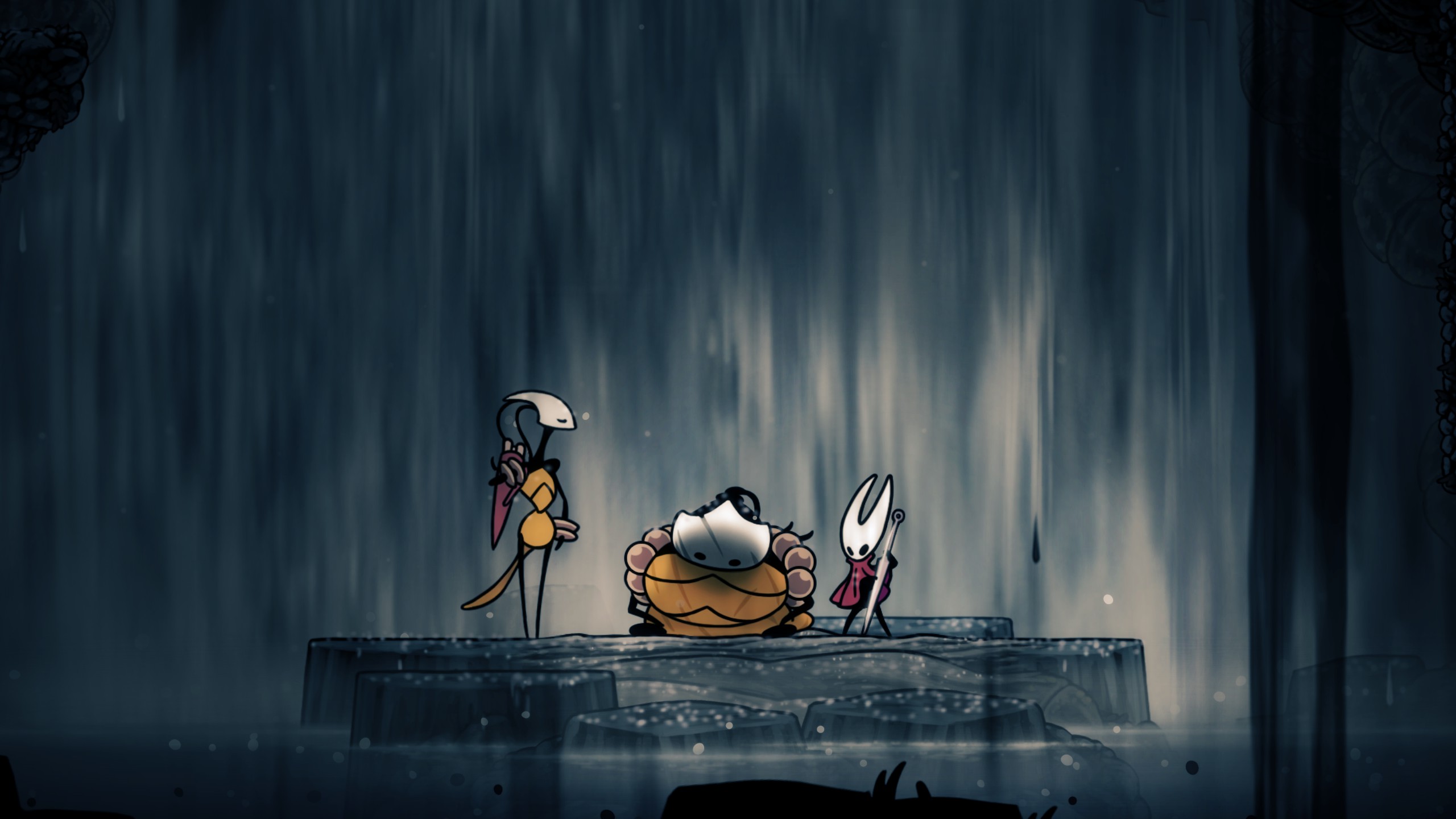
Team Cherry spent 7 years making Silksong. In that time, they built a subterranean kingdom, filled it with horror and beauty, and populated it with hundreds of different bugs of which every single one will, when prompted, sing a song that only they know—all so we could experience Hornet’s journey and decide for ourselves the shape of her story.
Art is itself a kind of charity. Set aside whatever transaction might be attached and you’re left with an exchange, a person sharing something—a thing that they have devoted themselves to, body and soul, a thing that comes together little by little and perhaps not at all or not all the way, a thing they know for certain they enjoy and have no idea if others will even acknowledge, a thing that they suffer for, a thing that they live for, a thing that only they have the vision for—offered to another person for whom they have no expectation or understanding of how it will change them, immediately or eventually.
Any amount of time, any degree of effort spent on a creative endeavor is worthwhile and worth the wait. There is a song in your heart that someone else needs to hear. How will you see that wish granted?


